


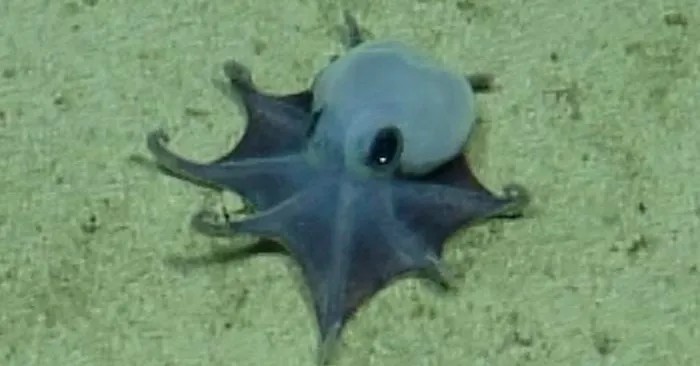
Невеликий синій восьминіг.
Він легко вміщується на долоні.
Він живе далеко від узбережжя Галапагоських островів, у глибинах океану, куди не проникає сонячне світло. Дослідники з Чиказького музею природної історії (Field Museum) нещодавно опублікували статтю в журналі Zootaxa, в якій остаточно привласнили цьому маленькому створенню офіційну назву.
Microeledone galapagensis.
Його виявили у 2015 році під час експедиції на науково-дослідному судні E/V Nautilus.
Морські біологи використовували телекерований підводний апарат (ROV), щоб дослідити дно біля берегів острова Дарвіна. Це північна частина архіпелагу, важкодоступні місця. Камера апарату сканувала крутий підводний схил на глибині 1737 метрів, що давить (близько 5817 футів), коли перед нею з’явилася ця тварюка. Яскраво-синя. Неймовірно помітні на темному тлі.
Команда провела ретельний огляд. Вони витягли один екземпляр і зняли ще двох, перш ніж дати їм спокій. Повернувшись на сушу, почався аналіз, але дослідники зіштовхнулися з глухим кутом.
Вони не могли визначити, до якого виду належить тварина.
Тоді вони відправили фотографію Джанет Воight — експерта з головоногих молюсків із музею Чикаго.
“Я відразу зрозуміла, що це щось справді особливе”.
Воight, провідний автор нового дослідження, ніколи раніше не бачила нічого подібного.
Але ось у чому проблема: щоб довести, що це новий вигляд, необхідно препарувати тварину. Повне анатомічне дослідження. Потрібно вивчити всі внутрішні органи, м’язи, дзьоб та інше. У них був лише один екземпляр. Лише один. Перетворювати його на «консервну банку» не було сенсу — втрата рідкісного зразка без резервної копії суперечить принципам науки.
Тому вони пішли розумним шляхом.
Комп’ютерна томографія.
Вони нашарували тисячі мікросканів. Створили 3D-модель. І зовнішню шкіру, і внутрішні органи. Жодних розрізів. Тільки пікселі. Технологія дозволила побачити найдрібніші деталі, не вдаючись до скальпеля.
– Щупальця? Короткі та товсті.
– Присоски? Рідкісні та дрібні.
– Шкіра? Гладка. Майже без пігменту на спині.
– Орган сифона? Унікальний.
Цих даних вистачило, щоб класифікувати Microeledone galapagensis та закріпити його місце серед інших головоногих у науковій класифікації.
«Оскільки томографічне дослідження є неруйнівним, воно особливо важливе для типових зразків, подібних до цього».
Стефані Сміт, співавтор статті, відзначає очевидну перевагу. До неї приносять надзвичайно рідкісні, приголомшливі зразки. Тепер вона може віртуально розкрити їх.
Це змушує замислитись.
Глибини океану залишаються значною мірою незвіданими. Ми маємо більше карт Марса, ніж морського дна.
Ці експедиції мають значення.
Не лише заради назв, які ми даємо істотам.
Але заради самих екосистем — величезних, невивчених і потребуючих захисту, який ми поки що не здатні належним чином описати.
Це маленькі восьминоги, що живуть у глибинах океану, їх бачив навряд чи хтось на Землі, каже Воight.
Якби зібрати всю суху суходіл на Землі в одну купу, вона все одно не перекрила б Тихий океан.
Він настільки величезний.
І там досі так багато всього, що ми ще не встигли розглянути.


