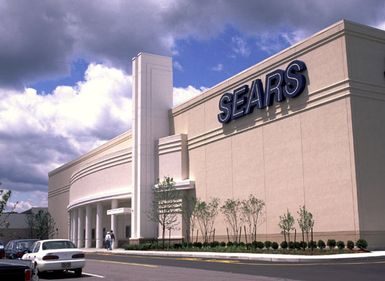
Sears is no longer the retail juggernaut it once was. The American general merchandise retailer, which spent decades selling everything from tools to appliances, is now a subsidiary of Sears Holdings Corporation. And that corporation? It was bought in 2019 by ESL Investments, a hedge fund controlled by Edward S. Lampert. The price tag for the holding company was $5.2 billion, approved by a federal judge in February of that year. But this financial rescue didn’t save the brand. It just changed who owned the wreckage.
The Mail-Order Origins
The story starts in Minneapolis, 1886. Richard W. Sears founded the R.W. Sears Watch Company to sell watches by mail order. He moved the operation to Chicago the following year and hired Alvah C. Roebuck to fix the watches. They set up a mail-order business for jewelry and timepieces. The first catalog dropped in 1887.
Sears sold his stake in 1889. Roebuck stayed behind. A few years later, they restarted the venture. By 1893, it was Sears, Roebuck and Company. Then came Julius Rosenwald. A wealthy clothing manufacturer, he bought out Roebuck’s interest in 1895 and reorganized the business. Sears went back to writing the catalogs. They became famous.
The company exploded. It sold low-priced goods to farms and villages with no other shopping options. The U.S. Postal Service helped. Rural free delivery started in 1896. Parcel post followed in 1913. Sears could now ship to the most isolated corners of the country. Rosenwald took over as president in 1909.
The Retail Pivot
Sears wasn’t always about physical stores. Between 1920 and 1943, it owned Encyclopædia Britannica, selling it directly through its catalogs. But the landscape was shifting.
In 1924, Gen. Robert E. Wood joined the company. He became the guiding force for the next three decades. Wood saw what others missed. The automobile was changing consumer behavior. People in suburbs and rural areas could now reach urban centers easily. Why rely on a catalog when you could drive to a store?
Wood opened the first Sears retail store in Chicago in 1925. The rollout was aggressive. The number of stores grew rapidly. By 1931, retail sales had surpassed mail-order sales.
Dominance and Decline
Sears rode the economic boom after World War II. It remained America’s largest retailer for decades. No one seriously challenged it until the 1980s. That’s when Kmart Corporation surpassed Sears in total sales. Wal-Mart eventually knocked both off their pedestals, becoming the largest retailer in the world by the end of the century.
Sears tried to adapt. In the 1980s, it diversified into real estate and financial services. But the core retail business was lagging. By 1992, the company started selling off subsidiaries to focus on what it did best—selling goods and services.
The catalog ended in 1993. The next year, Sears spun off Allstate Corporation, the insurance company it had founded in 1931. Sears still offered repair services for cars, appliances, electronics, and home heating systems. It was a massive ecosystem. But the ecosystem was shrinking.
The Lampert Era
In 2002, Sears bought Lands’ End for nearly $2 billion. Three years later, it merged with Kmart in a deal valued at around $12 billion. Sears Holdings Corporation was born. It became the third-largest retailer in the United States. Edward S. Lampert controlled nearly 40 percent of the new entity.
At first, Sears Holdings looked prosperous. But sales at Kmart and Sears stores kept falling. Lampert’s response was controversial. He initiated stock buybacks. Insiders claimed this drained cash from the company, leaving it vulnerable.
The corporation started selling assets. Lands’ End was spun off again in 2014. Lampert bought a controlling stake in Sears Canada, but that subsidiary closed in 2018. Meanwhile, stores across the United States were shuttering.
The Bankruptcy
The decline culminated in October 2018. Sears Holdings filed for Chapter 11 bankruptcy protection. It was a long, slow bleed. The 1993 catalog cancellation seemed like a symptom, not the cause. The real issue was the failure to adapt to a retail environment dominated by Wal-Mart and, later, Amazon.
Lampert’s strategy didn’t work. The hedge fund, ESL Investments, stepped in. The $5.2 billion purchase in early 2019 wasn’t a turnaround plan. It was a financial restructuring. Sears still sells household goods, hardware, and clothing. It still offers repair services. But the magic is gone.
Who owns Sears now? A hedge fund looking for a way out. The brand remains, but the business model that built it is history.