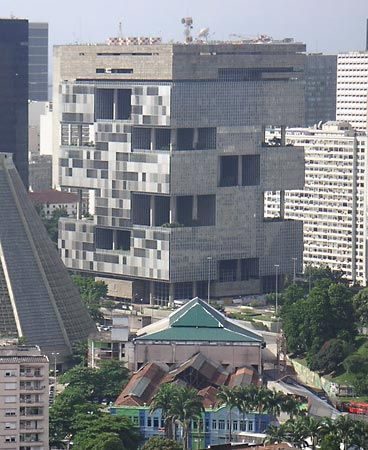
Petrobras isn’t just a company. It’s an economic engine that has reshaped Brazil’s identity since 1953.
Headquartered in Rio de Janeiro, the state-controlled oil giant is now the largest corporation in South America. But it didn’t always hold that crown so comfortably. It started as a pure monopoly. Then it became a competitor. Now it’s a tangled web of state interests, foreign partnerships, and massive infrastructure projects.
The story of Petrobras is a story of scale. In 1953, Brazil produced 2,700 barrels of crude oil a day. By 2010, that number had exploded past 2 million barrels daily. That growth wasn’t magic. It was geology and engineering meeting state policy.
The Deepwater Gamble
How did they get there? The answer lies in the deep sea.
In the 1970s and 80s, Petrobras took a risky bet on the Campos Basin, off the coast of Rio de Janeiro. They discovered massive deepwater oil fields. Most competitors thought the technology didn’t exist to drill 2,000 meters down. Petrobras proved them wrong.
Those fields are still the backbone. They sit alongside newer discoveries in the Santos and Espírito Santo basins. Together, they hold the bulk of Petrobras’s proven reserves. The company doesn’t just pump oil. It refines it across Brazil and neighboring countries. It runs service stations throughout South America. It even makes base chemicals like ethane and propylene through its petrochemical division.
And it’s not just fossil fuels. Petrobras produces biodiesel from oilseeds and distributes ethanol for Brazil’s gasohol program. It’s a diversified energy player, even if headlines only focus on the crude.
Breaking the Monopoly
For decades, the rules were simple. In 1963, Petrobras got exclusive rights to import crude oil. In 1964, the government nationalized private refineries. The state held the reins.
But times changed. In 1995, Brazil pushed to privatize state industries. The Constitutional Amendment passed in 1997 changed everything.
Suddenly, Petrobras had to compete. Foreign companies could bid for concessions. The Agência Nacional do Petróleo (ANP), the state regulator, now granted licenses. Petrobras lost its guaranteed production quotas. It gained the freedom to form joint ventures with international firms.
This shift forced a cultural change. The company had to become efficient. It had to look outward.
The Pre-Salt Revolution
The real game-changer arrived in 2006.
A consortium involving Petrobras, British firms, and Portuguese companies struck oil in the Santos Basin. 250 kilometers offshore. Under 2,000 meters of water. And beneath 5,000 meters of thick salt formations.
These were the “pre-salt” fields.
The discovery was so large it suggested Brazil could reclaim its status as a world-class petroleum producer. The government responded quickly. It created Petrosal to regulate these reserves. It mandated that Petrobras be involved in every single project in the pre-salt zone.
Why? Because the stakes were too high to leave to private investors alone. The state wanted control over the wealth flowing from beneath the ocean floor.
The Scandal that Shook Everything
But control brings corruption.
By late 2014, the world was watching. Petrobras was already bruised by falling global oil prices. Then came the scandal.
A massive investigation revealed kickbacks. Millions of dollars flowing to Petrobras officials. To members of the ruling Workers’ Party. To the Party of the Brazilian Democratic Movement. The money came from construction firms seeking contracts.
It wasn’t just theft. It was a systemic rot. The investigation alleged that the political elite had monetized the very engine that was supposed to power Brazil’s future.
Today, Petrobras operates in more than 25 countries. It competes against foreign giants and domestic rivals alike. It manages some of the most complex drilling operations on the planet. Yet the shadow of 2014 lingers.
Can a company be both a state policy tool and a market competitor? The answer remains messy. The oil keeps flowing. The refineries keep turning. But the trust? That’s a different commodity. And it’s harder to extract.