It happened in the Round of 16.
Argentina beat Egypt 3-2. A fantastic game, mostly. But the result is secondary now to the shouting match about the Video Assistant Referee system. The Egyptian Football Association is furious. They say the referee failed to use VAR correctly. They filed a formal protest. Really?
They lost by a goal. It happens.
But the complaint goes deeper. “We cannot remain silent,” their statement read. They argued that specific refereeing calls swayed the final score. It echoes a complaint heard all year long. Goals disallowed for offside when no flag went up on the field. Decisions that felt like they favored specific teams. Critics call it bias. They call it manipulation disguised as technology.
Is the tech broken? No.
It’s who interprets it.
The Machine
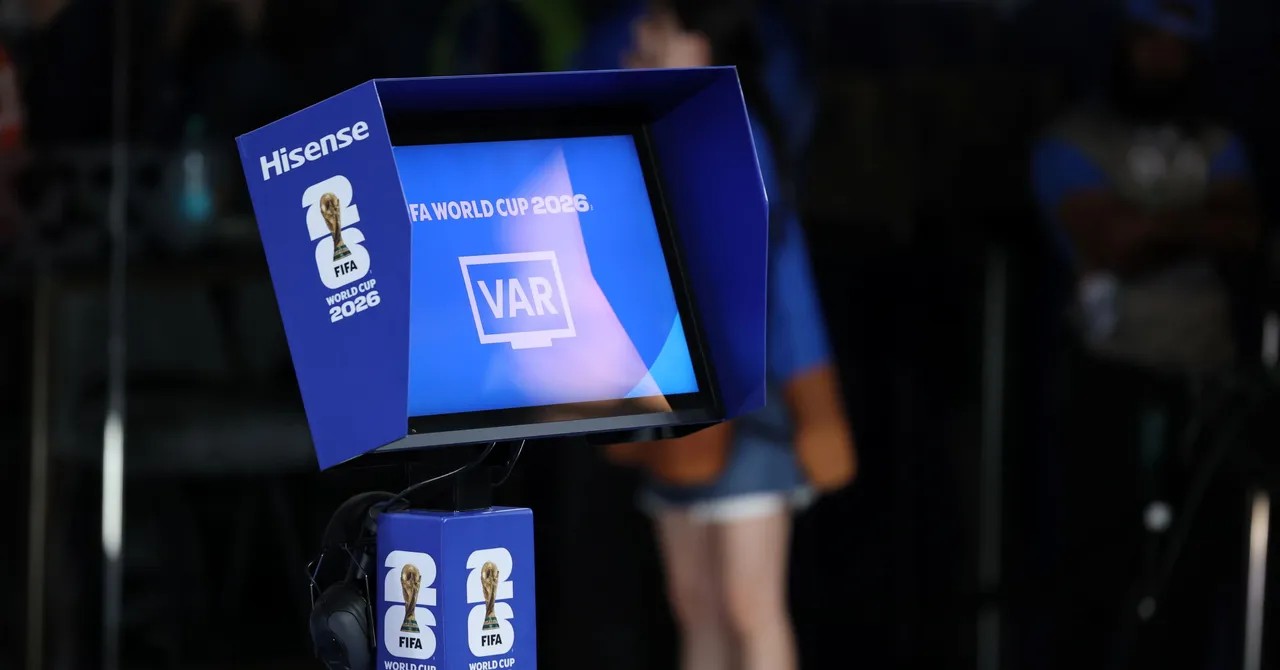
Let’s look at what VAR actually has. It is impressive hardware.
42 broadcast cameras feed into the system. Eight of them offer super-slow motion. Four go even slower, into ultra-slow motion. Semi-automated offside detection tech is there too. Every camera in the FIFA host network is plugged in.
It sounds like omniscience.
In practice? It’s a room with five people. A VAR referee and four assistants. They look at angles. They look for anomalies. They tell the head ref what they saw. The head ref looks at a monitor on the sideline. Then they decide.
In the past, this was limited to goals, penalties, red cards, and mistaken identity.
FIFA added new rules for the 2026 edition. Now VAR checks for incorrect second yellow cards. It watches for blocking or shoving before a free kick. It even tracks the “Prestianni-Vinícius rule” – covering your face during a fight is now a reviewable offense for a straight red. They also clarify confusion between corner kicks and goal kicks.
“FIFA is doing this to prevent agoal from being scored under circumstances not correctly assessed,” former Mexican referee Armando Archundia told WIRED en Español.
The Human Error
Here is the problem.
Soccer is subjective. Technology is objective. You can’t mix them and get a pure result.
Fernando Galván, a sports analyst, notes that refereeing lagged behind the sport for years. We went from one referee to two linesmen. Then a fourth official. Then assistant refs behind the goal. Six humans trying to agree on one truth?
Complex. Slow. Flawed.
VAR was supposed to fix the flaw. Instead, it created dependency.
“First, the referee decided everything. Then VAR decided everything.”
Galván sees it as a pendulum. Too much reliance on the booth means the guy on the field stops thinking. For 2026, FIFA tried to swing the pendulum back. The new guidelines restore autonomy. The head ref makes the call. The tech just provides better data. It doesn’t remove the human from the loop. It informs them.
But what if the human is poorly trained?
The Gap
Only 20 percent of countries playing in the 202 World Cup have VAR in their own leagues.
Think about that.
The referee might be elite at reading the game. He might know every rule by heart. But he hasn’t used this specific machine every Saturday for a decade. He’s using it once a year, under the brightest lights on earth, while 42 cameras judge him.
FIFA trains their picked crew – 54 top referees – through annual meetings. They try to standardize criteria.
It fails.
“It’s a profession that isn’t very unified,” Galván said. “Achieving unanimous criteria on a global scale is almost impossible.”
So we have 42 cameras pointing at a moment, but only one pair of eyes deciding what matters. If those eyes interpret a shove differently than the cameras see a block – guess who gets blamed? The technology. Or the conspiracy.
We wait for robots. AI referees. Impartial silicon minds that don’t care if you support Brazil or Egypt.
Not yet.
For now, it remains a game played by humans, officiated by humans, arguing about screens.
Until the name of the sport changes.