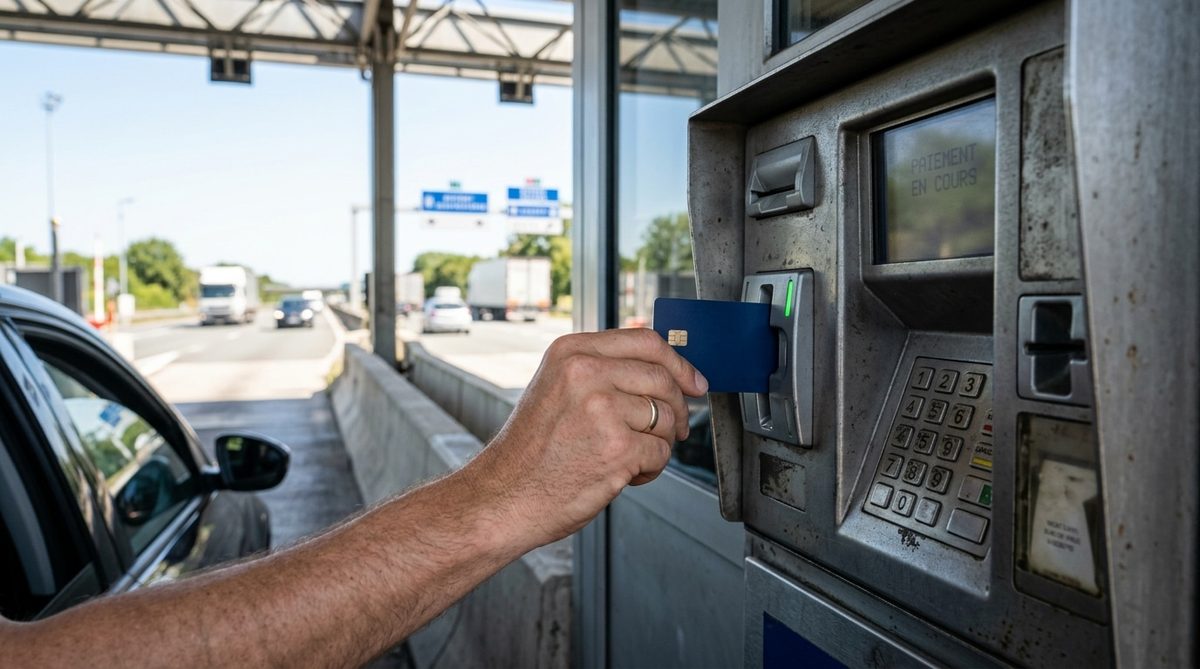
The line stretches out behind you. The barrier stays down. The annoying beep signals a hard no. It is the summer driving nightmare that thousands of motorists dread. You’ve been on the road for hours. Your bank card, held tightly between tired fingers, is declined. No warning. No explanation. The driver assumes a terminal glitch. Maybe a bank error. Perhaps fraud.
The reality is usually far more mundane. And it is entirely avoidable with a few simple checks before you turn the key.
The Exhausted Driver’s Nightmare
The gesture seems innocent. Swipe the card. Enter the PIN. But after hundreds of kilometers, the brain stops analyzing details. You likely forgot the second gas fill-up. The hotel bill. The restaurant dinner. The supermarket restock before leaving. Vacations concentrate spending into a few intense days. Your payment limit, typically sliding between 1,500 and 3,000 euros over a 30-day rolling period, saturates without any alert.
Other traps exist. Contactless blocks. Fraud controls triggered by payments in unfamiliar zones. A recent payment incident that weakened the card’s status. The barrier remains lowered. Stress rises. You reverse or run toward an assistance booth while horns blare.
Four Invisible Culprits Behind Toll Rejections
Refusal at a toll booth rarely means an empty account. It usually points to one of four specific issues.
First is the sliding limit. Banks add up payments over the last 30 days, not the calendar month. This traps drivers who leave for vacation right after big spending.
Second involves cards requiring systematic authorization. Think Visa Electron, Maestro, or cards from neobanks like N26, Revolut, or C-zam. These cards query the bank before every single transaction. Toll terminals, often not connected in real-time, reject the transaction due to a lack of immediate response.
Third comes from pre-authorizations. A gas station might block 150 euros for a 40-euro fill-up. That sum stays immobilized for days, eating into your available limit.
Finally, fraud control can freeze your card. When multiple transactions happen far from home, this is an automatic security measure. It protects as much as it annoys.
| Cause of Refusal | Revealing Sign | Quick Fix |
|---|---|---|
| Limit Exceeded | No warning, hard decline | Increase limit in the app |
| Systematic Auth | Electron, Maestro, Neobank | Use cash or Telepass |
| Gas Station Pre-auth | Balance reduced by 100-150€ | Pay at the register, not pump |
| Fraud Control | Payments far from home | Notify bank before departure |
The Right Habits Before Hitting the Road
The defense takes just minutes in your banking app. Most banks allow you to modify your payment and withdrawal limits for free. You can do this online or via smartphone. The change might be instantaneous. However, SMS validation can take up to 72 hours depending on the institution. Start days before the trip, not in the toll line.
Tell your bank about long trips or international travel. This prevents fraud blocks. If you drive with a systematic authorization card, the most reliable solution is the Telepass badge. It bypasses the problem entirely, saving time at dedicated barriers.
If the card is still refused, options remain. Pay cash to an agent. Use contactless via smartphone or smartwatch with a different registered card. Call the booth assistance to settle later by mail.
A card rejected at a toll booth almost never relates to an empty account. It is usually the result of an unanticipated limit, an unsuitable payment method, or overzealous security. Taking thirty seconds to adjust banking parameters before summer’s major trips spares you a moment of loneliness behind the wheel. And the annoyed stares from drivers stuck behind you.
Is the true luxury of travel the destination? Or the certainty of passing through the barrier without ever having to roll down the window?