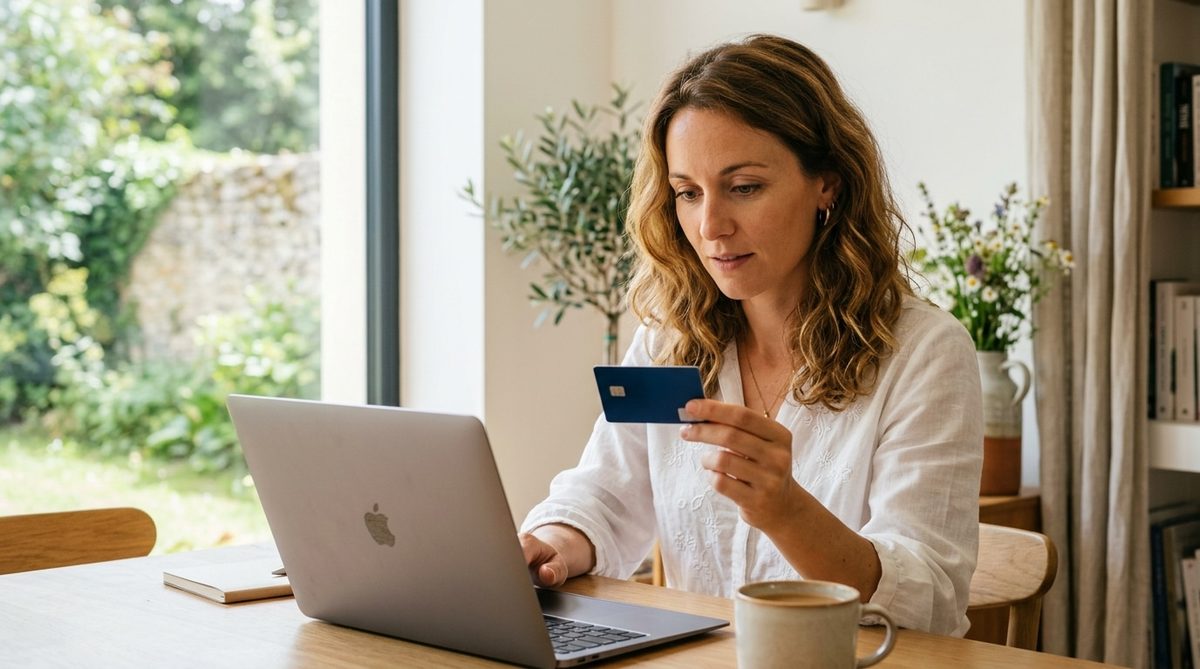
The checkout ritual is a relic. For decades, we’ve performed this awkward dance: swipe or insert the card, shield the keypad with a free hand, punch in four digits, and pray for the green light. It’s inefficient. It’s vulnerable. And now, it’s ending.
This summer, French banks are quietly dismantling the PIN code. The shift isn’t just about convenience. It’s a technological overhaul designed to kill fraud and erase the anxiety of forgotten passwords. The old method is being replaced by something far more personal: fingerprint validation directly on the card.
Why Biometric Cards Are Replacing PINs
The current system has a glaring flaw. Contactless payments are great for small, quick transactions. But the limit is stuck at €50. Go above that—say, for home improvement tools or expensive gear—and you’re forced back into the manual entry zone. That’s when security breaks down.
Shoulder surfing is real. People are watching. They’re looking for those four digits.
The new generation of cards from major institutions like Crédit Agricole, BNP Paribas, and Société Générale removes this vulnerability. The technology is called biometric payment cards. It uses an embedded fingerprint sensor to validate transactions instantly. No typing. No hiding. Just touch.
“The mechanical numeric keypad has traditionally been the weak link in local financial security.”
This innovation doesn’t just speed up checkout. It fundamentally changes how data is handled. The fingerprint never leaves the card. It’s stored locally on the chip, encrypted and sealed. When you press your thumb against the sensor, the comparison happens inside the plastic. The merchant’s terminal sees nothing but a standard contactless signal. The bank’s servers see nothing. The internet sees nothing.
How Biometric Payment Cards Work in Practice
The transition from standard cards to biometric cards feels seamless to the user, even though the underlying tech is radical.
Here is the mechanics of the new process:
- Approach: You hold the card near the terminal, just like any contactless payment.
- Verify: Instead of waiting for a prompt to enter a PIN, you press your thumb onto a tiny, square, ultra-thin sensor embedded in the card’s surface.
- Validate: If the fingerprint matches the stored profile, the transaction approves instantly.
There is no ceiling on transaction limits for these payments. Whether you’re buying seeds or outdoor materials, the verification is instantaneous. The €50 barrier that forces manual entry is gone. The hybrid system known as “Sans Contact Plus” is being phased out in favor of this unified, high-security approach.
The Security Advantage: No More Shoulder Surfing
The old PIN system relied on human memory and privacy. Both are fragile. You forget your code. Someone sees your code. The terminal itself can be tampered with.
Biometric payment cards eliminate these human errors. The fingerprint data is never transmitted over the network. It’s not sent to the merchant. It’s not sent to the bank. It stays on the card’s chip.
This means:
* No data interception: Hackers can’t steal your PIN during a transaction because there is no PIN to steal.
* No shoulder surfing: People can’t watch you type.
* No forgotten passwords: You don’t panic in a foreign country because you can’t remember your code.
For merchants, the upgrade is invisible. Existing point-of-sale terminals don’t need software updates or hardware replacements. They continue to receive the payment signal exactly as they do now. The verification happens offline, inside the card. The merchant’s register simply processes the payment as a successful contactless transaction.
The End of an Era
The era of shielding the keypad with your hand is over. The era of forgetting your PIN while on vacation is ending.
We are moving toward a payment landscape where security is biological, not bureaucratic. The fingerprint sensor on credit cards is not just a gimmick. It’s a robust, localized solution to a global problem. It removes the middleman from the verification process. It closes the gap between speed and security.
The technology is here. The banks are rolling it out. The PIN code is on borrowed time.
What happens when your face, your voice, or your heartbeat becomes your password? The checkout counter won’t wait for an answer. The transaction is already approved.
How Biometric Cards Are Replacing PINs for Faster, Safer In-Store Payments
The rollout of high-end security for everyday transactions is accelerating, even in the height of summer heat. These connected rectangles are trickling into homes, fundamentally altering how we handle physical cash and plastic. Right now, banks are testing the waters with specific user tiers to ensure reliability before a mass launch.
BNP Paribas started the technical transition by equipping its Visa Premier cards first. Credit Agricole prioritized its Mastercard Gold segment. But this exclusivity won’t last. Societe Generale is already signaling a shift toward wider distribution, planning to deploy these sensors on standard access cards, not just premium offerings.
This democratization will deeply change how we pay for everything from large hardware store hauls to quick terrace lunches. The innovation targets two main pain points: waiting and security. The planned end of numerical memory requirements removes a daily management burden for pragmatic users. Checking out becomes almost imperceptible during a busy day. Your fingerprint acts as the invisible guarantor of a new European security standard.
Why Fingerprint Verification Beats PIN Entry
European financial institutions are responding to contemporary issues like proximity fraud and forgetfulness by replacing tedious four-digit codes with simple tactile verification. The biometric card achieves a fusion of an instinctive physical gesture and formidable personal data protection. It transforms our relationship with daily spending.
But there are trade-offs. You are trading the anonymity of a PIN for a unique biological marker. Once your fingerprint is linked to your card profile, that data travels with every transaction. While banks argue this is safer than a stolen PIN, it changes the risk profile of a lost card. If someone picks up your dropped card, they can’t use a PIN they don’t know. But can they bypass the sensor? Modern sensors require liveness detection to prevent spoofing with fake fingers or high-resolution images.
Where does this leave you if the sensor fails? Or if you suffer a temporary injury to your finger? Most systems have fallback options, but those introduce friction. You might have to revert to the old PIN method or contact support. It’s a convenience for the majority of days, but a potential headache on the bad ones.
Will Biometric Cards Replace Your Entire Wallet?
The big question remains: will this future validation method equip every wallet before the return of next year’s massive highway traffic jams? The infrastructure is ready. The user acceptance is growing. But the full transition depends on merchant adoption and terminal upgrades. Not every small vendor has the budget for the latest secure POS systems immediately.
For now, you can expect a hybrid phase. You’ll see biometric cards in major chains and online-first merchants, while smaller shops still rely on chip-and-PIN or contactless taps without verification. It’s not an overnight switch. It’s a gradual erosion of the old security norms.
The appeal is clear. No more fumbling for a code. No more looking over your shoulder to shield your digits. Just a touch. But does it make us complacent? We’re outsourcing our security awareness to a machine. When the battery dies or the scanner glitches, do we remember how to protect ourselves? Probably not. That’s the trade-off of efficiency. We gain speed. We lose a small bit of control. And maybe that’s the price of modern convenience.