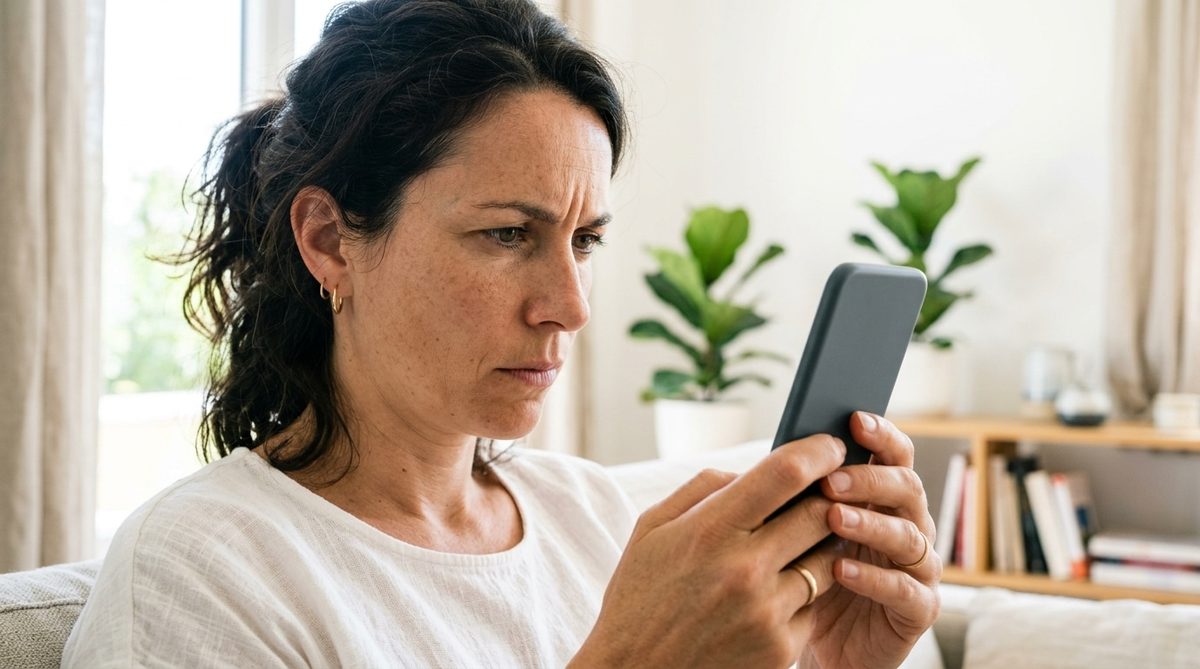
Europe changed the rules last autumn. Now, instant transfers are free for all eurozone banks. You can move money in under 10 seconds, anytime, even on holidays. It feels liberating, especially during summer when you are juggling expenses from your phone. But that speed is a trap.
Once you confirm, the money is gone. There is no undo button. Scammers know this.
How the fake bank advisor scam drains your account instantly
The mechanism is brutal. A criminal calls you, claiming a hack is in progress. They tell you to move your funds to a “safe” account to protect them. You do it because you are scared.
There is a safety net. Since October last year, Europe mandates Verification of Payee (VoP). This checks if the name on the IBAN matches the name you type. It catches typos. It does not catch manipulation.
If you willingly send money to the wrong person, VoP fails. The transaction clears in 10 seconds. Authorities warn that recovering these funds is nearly impossible. The damage is done before you realize it.
How to set a cap and double-check to block instant fraud
Do not stop using instant transfers. They are useful. But you must restructure your settings.
Most banking apps hide a critical feature: separate limits for instant transfers.
Here is what to do:
- Go to your account settings.
- Find the limit for instant payments.
- Lower it drastically. Set it to a low amount, like €100 or €250.
This makes a massive single-transfer theft mechanically impossible.
For extra security, enable Strong Customer Authentication (SCA) for these transfers. This requires a fingerprint, face scan, or a dynamic password for any payment over your set limit.
Scammers cannot bypass these biometric checks remotely. If you are not physically present, the transfer fails.
You have the tools. You just have to find them in the menu.
How to limit instant transfers to €50 or €100 in your banking app
The process takes seconds. No tech skills required. You just need your phone and your bank’s security settings.
Start on your app’s home screen. Go to your card settings or payment authorizations. You are looking for the transaction limits tab. This is where you control the maximum amount per operation.
Slide the instant transfer limit down. Set it to fifty or one hundred euros. That is a low, ordinary sum. It is the baseline protection.
Then find the biometric toggle. Force a fingerprint or face scan before any change to a recipient or sensitive financial modification. Check that box. Keep it on.
Why this “delay” stops fraudsters mid-attack
Think about how a scammer works. They call. They create urgency. “Your account is compromised,” they say. “Send this money now to a safe account.”
If your limit is set to €100, you can send €100. But if they want €2,000, the app says no.
To raise that limit, you must go through multiple verification steps. This is the “ritual” the text mentions. It breaks the pressure. The scammer is on the phone, demanding action. You are on your phone, looking at a verification screen. The clock is now on your side.
This temporary delay imposed by the code structure breaks the perpetual pressure of urgency that criminals try to install over the phone.
You are not fighting a bot. You are fighting a human who wants a quick win. If the process is slow, they hang up. If the process requires a biometric scan that they cannot provide, they hang up.
What happens when you actually need to send a large amount
Sometimes you have to pay a big bill. A car repair. A flight. A tax payment.
You can raise the limit. But it is not instant. You have to wait. You have to verify your identity through several intense checks.
This is the trade-off. Convenience versus security.
If you want to send €5,000 instantly with no delay, you are inviting risk. The system is designed to make that hard. That is a feature, not a bug.
Is it worth the friction?
Yes.
The source text argues that this “hygiene” on portable devices is the technical certainty to approach the new school year with better financial auspices. It allows you to benefit from advances in monetary circulation while neutralizing incessant virtual assaults.
The frauds this season are getting more ingenious. The question is not whether to protect your data. It is whether you will make the protection easy for you and hard for them.
Set the limit. Turn on the biometric lock. Take the ten seconds.
You might not need to send €10,000 today. But if you do, you will be the one in control. Not the caller.