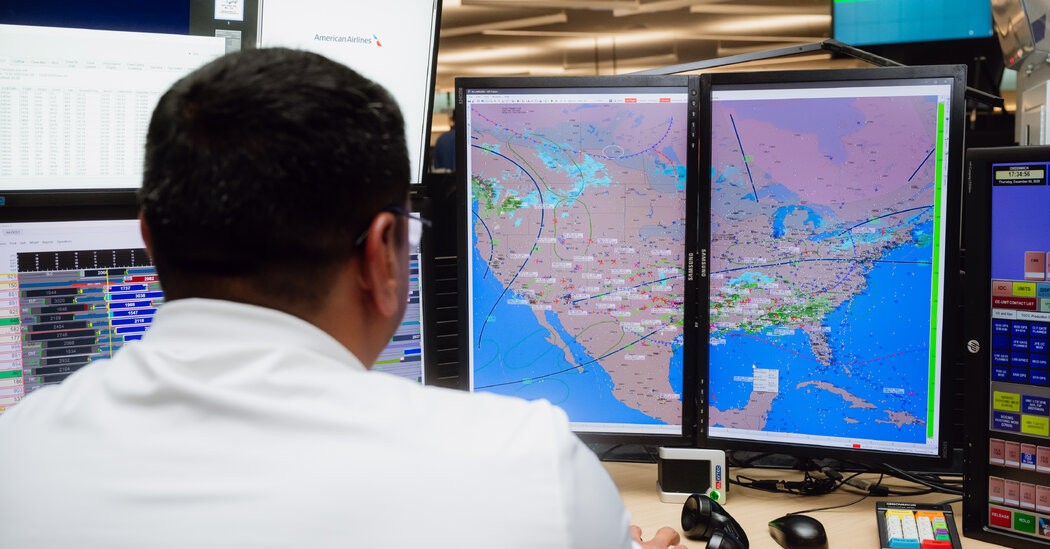
American Airlines Flight 27 recently diverted over 2 hours off course when a passenger suffered a medical emergency mid-flight. But while passengers and crew experienced an abrupt change in plans, an entire team quietly worked behind the scenes to manage the fallout. This incident highlights the critical, yet often invisible, role of airline operation control centers.
The Invisible Backbone of Air Travel
These centers—staffed by dispatchers, meteorologists, mechanics, and medical personnel—are the nerve hubs for major airlines. When something goes wrong, whether a medical emergency, severe weather, or mechanical failure, these teams take charge. Their job isn’t to prevent disruptions (though they plan for them), but to manage them with minimal chaos.
The example of Flight 27 illustrates this perfectly. Dispatcher Mike Doran coordinated with onboard medical staff, rerouted the plane to San Francisco, and then began untangling the logistical nightmare that followed. This included scheduling crew rest, rebooking passengers, restocking meals, and reassigning the aircraft to its next scheduled route.
Why It Matters: The Ripple Effect of Disruption
Even seemingly small disruptions have cascading effects. A diverted flight means delays for connecting passengers, potential overtime costs for crew, and wasted fuel. Airlines invest heavily in contingency plans—spare planes, backup parts, and on-call pilots—but these resources are useless without skilled coordination.
The stakes are highest during peak travel periods like Thanksgiving or winter storms when airport operations can grind to a halt. In these scenarios, airline operation centers aren’t just responding to chaos; they’re actively preventing a complete collapse of service.
The Future of Flight Control
Industry consultant Michael Boyd explains that these centers exist to “make the best possible use of resources.” As air travel becomes more complex—with increasing flight density and unpredictable weather patterns—the role of these unseen teams will only become more vital.
Airlines depend on these control centers to ensure that disruptions remain invisible to the average passenger, even as they are working around the clock to keep the entire system running smoothly.
In a world where travel is often taken for granted, these operations control centers stand as the quiet engine that keeps the skies moving.