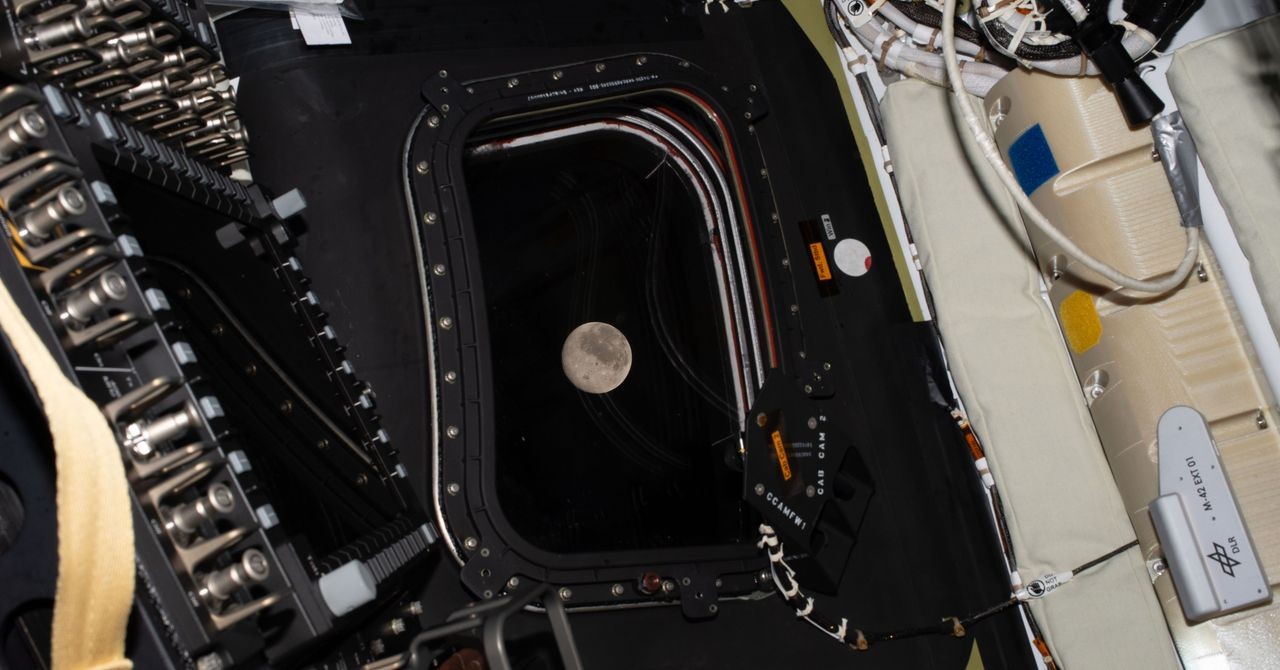
NASA’s Artemis II mission has successfully concluded, marking a monumental milestone in human space exploration. After a 10-day, 695,000-mile journey, the crew of the Orion spacecraft, Integrity, splashed down in the Pacific Ocean near San Diego on Friday evening.
This mission was not merely a flight around the Moon; it was a high-stakes test of deep-space survival and a journey that pushed the boundaries of human distance from Earth.
Breaking Records and Testing Limits
The four-person crew—Commander Reid Wiseman, Pilot Victor Glover, and Mission Specialists Christina Koch and Jeremy Hansen —set a new benchmark for human endurance. During the voyage, the crew reached a distance of 252,756 miles from Earth, officially surpassing the previous record of 248,655 miles set by the Apollo 13 mission.
The mission served as a rigorous proving ground for the Artemis program’s hardware and human protocols:
– The Space Launch System (SLS): The crew launched via the most powerful rocket ever built for human flight.
– Orion Systems: Astronauts conducted manual flight tests and evaluated the spacecraft’s life-support systems.
– Technical Hurdles: The mission was not without its challenges, including difficulties with the spacecraft’s wastewater management system, a technical issue NASA administrators noted must be addressed before long-term lunar habitation.
– High-Speed Re-entry: The return required a harrowing descent, with the capsule hitting the atmosphere at 24,000 mph and enduring temperatures of 3,000°F.
A New Perspective on the Lunar Landscape
Because the Artemis II trajectory flew higher above the lunar surface than the Apollo missions, the crew provided humanity with unprecedented visual data. For the first time, humans observed the entire disk of the Moon’s far side in person.
The astronauts reported several unique phenomena that could redefine our understanding of lunar geology:
– Unseen Colors: The crew observed brownish patches and a distinct greenish tint on the Aristarchus Plateau. Scientists suggest these hues may indicate volcanic terrain, similar to the “green glass” discovered during the Apollo era.
– The “Lampshade” Effect: Mission specialist Christina Koch described young craters as having bright, whitish centers, comparing the effect to light shining through pinpricks in a lampshade.
– A Rugged South Pole: The crew provided firsthand accounts of the Moon’s south pole, describing it as a “jagged” and “intimidating” landscape—a critical observation for NASA, which aims to land future missions in this region by 2028.
Scientific Breakthroughs and Deep Space Communication
The mission also acted as a laboratory for observing celestial events and testing new technology. During a lunar solar eclipse, the crew witnessed a halo of light surrounding the Moon and observed small meteorites striking the surface in real-time. Understanding these impact frequencies is vital for the safety of future lunar bases.
To manage the massive influx of data, NASA utilized a new laser communications system. Capable of transmitting up to 260 megabits per second, this technology allows for much faster data transfer than traditional radio, enabling scientists on Earth to receive high-resolution photos, audio, and sketches almost instantly.
“Humans probably have not evolved to see what we are seeing,” remarked astronaut Victor Glover, describing the surreal experience of viewing an eclipse from the lunar vicinity.
Conclusion
The Artemis II mission has successfully bridged the gap between Earth-orbit operations and true deep-space exploration. By testing advanced communications, documenting unique lunar geology, and breaking distance records, the crew has laid the essential groundwork for the next era of permanent human presence on the Moon.