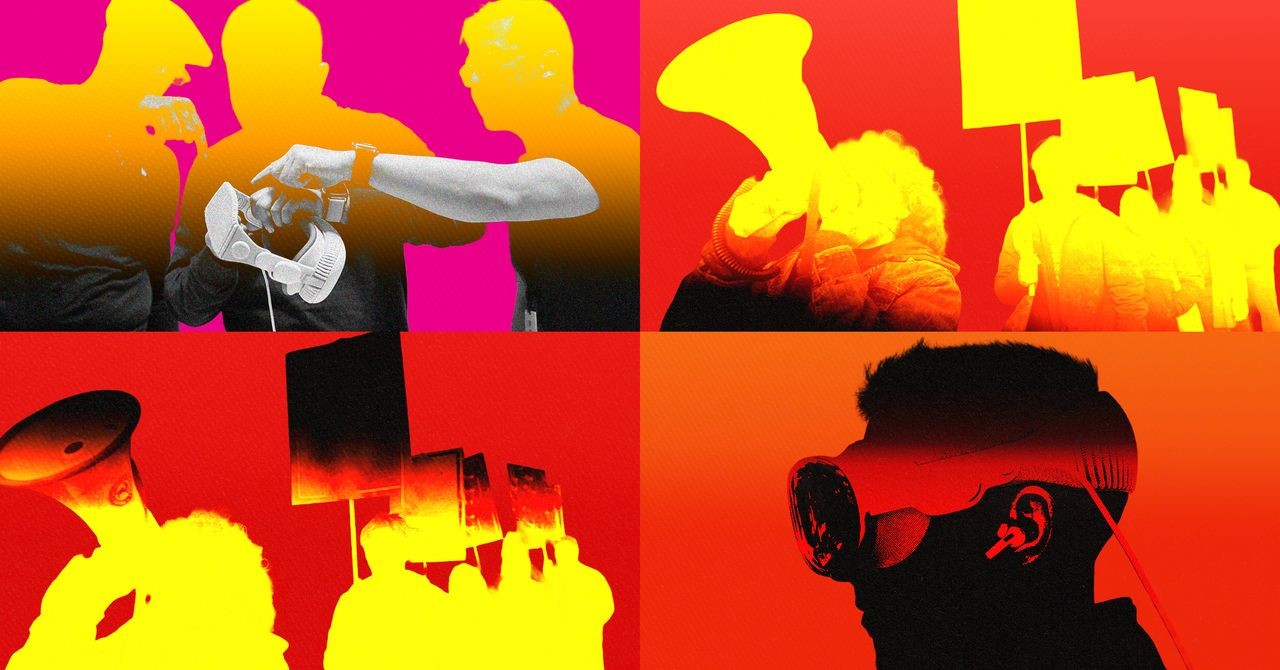
When Apple launched the Vision Pro in early 2024, the company treated the rollout with the reverence of a religious event. Employees were flown to Cupertino for top-secret training, required to use GPS-blocking Faraday bags, and sworn to strict nondestruction agreements to protect the “novelty” of the experience.
On paper, the strategy was designed to create awe. In practice, the rollout became a symptom of a much larger, systemic problem: the widening gap between Apple’s original retail philosophy and its current operational reality.
A High-Stakes Demo Meets a Leaner Reality
The Vision Pro is not a simple “plug-and-play” device. To give a successful demonstration, employees must navigate a complex sequence: scanning the user’s face, selecting from 25 different light seal sizes, and guiding customers through an eye-and-finger-based interface that can feel counterintuitive.
However, the workforce tasked with delivering these high-touch experiences had changed significantly since the era of Steve Jobs:
- Staffing Shortages: Under current leadership, Apple stores have moved toward leaner staffing models. Many employees reported receiving only 20 to 30 minutes of training—far short of the hours required to master the device’s intricate script.
- A Transient Workforce: The reliance on temporary workers and recent hires meant many salespeople lacked the deep product knowledge and experience necessary for a major launch.
- Operational Friction: Instead of the specialized, hands-on training of the past, much of the onboarding had shifted to digital modules, leaving employees feeling “thrown from the nest.”
The Shift: From “Evangelism” to “Efficiency”
The difficulties faced during the Vision Pro launch highlight a fundamental shift in Apple’s DNA. To understand why the retail experience felt fractured, one must look at the transition from the Jobs era to the Cook era.
The Jobs Era: Retail as a “Church”
Steve Jobs viewed the Apple Store not merely as a shop, but as a place for evangelism. He prioritized:
– High-caliber talent: Avoiding temporary workers to ensure every employee felt like a premium brand ambassador.
– Education over Sales: Devoting massive amounts of floor space to teaching customers how to use their tools, rather than just pushing hardware.
– The “Creative” Role: Providing personalized, one-on-one tutorials that built long-term customer loyalty.
The Cook Era: The Drive for Optimization
Since Tim Cook took the helm, the focus has shifted toward operational efficiency and profitability. As an industrial engineer, Cook’s mantra centers on minimizing “evil” inventory and maximizing margins. This has led to:
– Metric-Driven Sales: A shift from measuring customer satisfaction (Net Promoter Scores) to aggressive sales targets, such as AppleCare+ attachments and accessory bundles.
– The Erosion of the “Creative”: Once specialized educators, “Creatives” have increasingly been repurposed as general floor staff, leading to demoralization and, in some cases, unionization efforts.
– Standardization: Moving away from human-led, bespoke training toward self-guided, screen-based modules.
The Cost of Optimization
While Cook’s focus on efficiency has made Apple one of the most profitable companies in history, the Vision Pro rollout suggests there may be a hidden cost to this “lean” approach.
The device itself faced hurdles—it was heavy, expensive ($3,500+), and lacked a robust app ecosystem. But the friction at the retail level acted as a force multiplier for these problems. When a device is this complex and expensive, the salesperson is the most critical link in the chain. By optimizing the retail workforce for cost rather than expertise, Apple may have inadvertently weakened its ability to sell its most ambitious product yet.
Conclusion: The Vision Pro rollout revealed that Apple’s retail strategy has moved from a focus on brand evangelism to a focus on operational efficiency, creating a disconnect between the complexity of its new technology and the capacity of its frontline staff to sell it.