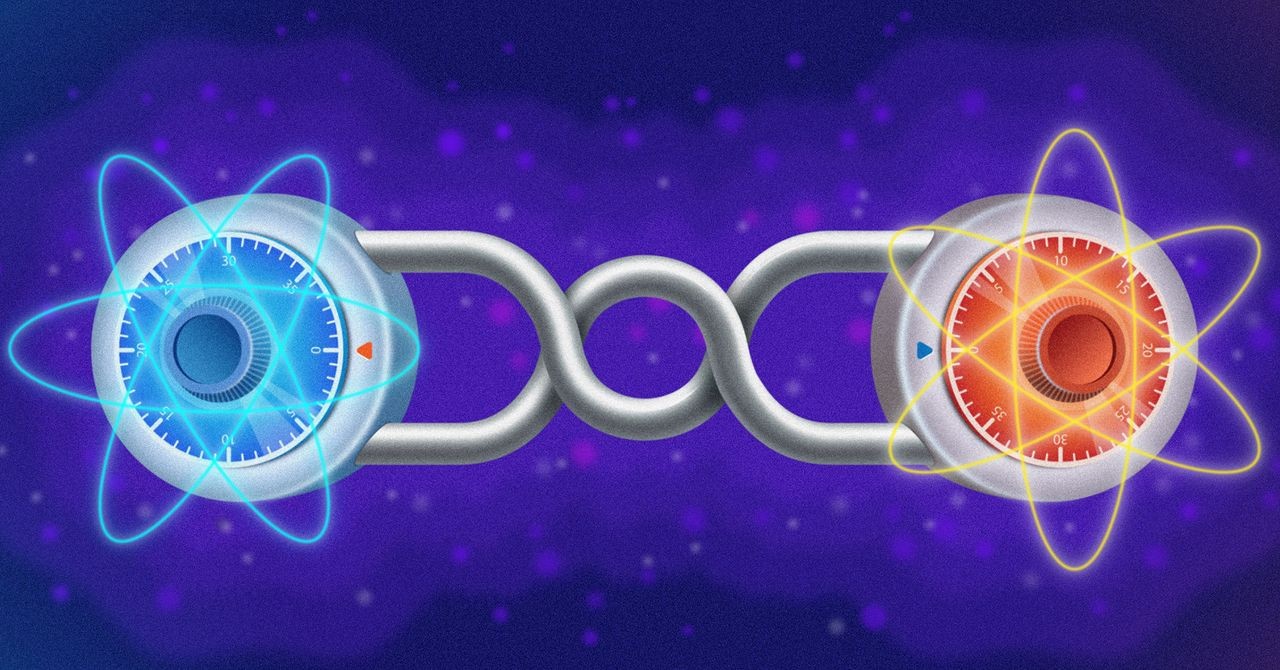
We all know the drill. Quantum computers will eventually smash our encryption like a sledgehammer through glass. So researchers spent years building new shields, codes that stay safe even against quantum attackers. They got clever too. Using quantum mechanics itself to lock communications down. It’s supposed to be bulletproof.
But physics moves. Newton wasn’t the end. Quantum mechanics might not be either. What happens to our security if a deeper law takes over?
“You have to be paranoid,” Ravishankar Rananathan says. He studies quantum info in Hong Kong. “Minimize assumptions. Pretend quantum mechanics isn’t the final truth.”
It’s not just paranoia. The clash between gravity and quantum stuff suggests we’re missing something huge. Something weird. To prepare for the unknown some cryptographers look lower. Below quantum mechanics. Down to causality.
Sabotage by design
Think of quantum key distribution. You send a key using quantum particles. Anyone who tries to peek breaks the entanglement. The break reveals them. It works because of the “monogamy” of entanglement. Two particles stay locked in sync. A third party can’t join without shattering the bond.
But what if that rule vanishes?
Enter quantum jamming.
Imagine someone tampering with the link so subtly that the mess isn’t obvious. The particles shift. The correlation changes. But the outsiders see nothing wrong. The entanglement holds. It just… bends differently. No trace.
Scientists love this thought experiment. It probes cause and effect. Maybe jamming is impossible. A fundamental ban exists. Or maybe it happens out there right now.
Jim the Magician
Michał Eckstein from Poland tells it best.
Alice. Bob. And a magician named Jim.
Jim holds two balls. One white. One black.
He puts them in boxes. Sends Alice one way at light speed. Sends Bob the other way. The balls are linked. Opposites. If Alice sees white, Bob must see black. Classic quantum stuff.
Alice opens her box. White.
Bob opens his. White.
They fly home. Compare notes. Same color.
Jim played a trick. He changed the link from “opposite” to “match” while they were apart. But during the trip? Each still saw random results. Fifty-fifty. Nothing looked wrong in the moment.
That’s jamming.
In the mid-90s three physicists asked how weird nature could get before breaking relativity. You can’t send signals faster than light. If you did causality dies. So Jacob Grunhaus Sandu Popescu and Daniel Rohrlich stuck to that one rule. They imagined a jammer who could tweak correlations between distant particles. Without sending signals.
They wrote the paper. Then forgot about it.
Popescu says “we wrote it and that was the end.”
The clock runs out
Twenty years pass. Quantum computing goes from lab curiosities to real labs.
By 2016 protocols relying on monogamy of entanglation were mature. They seemed secure. Device-independent crypto relied on the fact that cheating destroys the signal.
Then Rananathan and Paweł Hordecki found the old paper.
The ground shifted.
If jamming works monogamy fails.
All device-independent crypto relies on a property that vanishes the moment you allow these jamming correlations.
We assumed the universe wouldn’t let us cheat the system. We built walls on that sand. Now we ask: Was the wall ever there?