


Public companies are not a modern concept of entrepreneurship. It is a business organization wholly or partially owned by the state. Utilities are administered by public institutions. These entities exist for a reason. They can be put under public ownership because society believes that the services are necessary and should be a government monopoly.
Let’s think about utilities. gas, electricity, gas, communication, and some transportation options. These are typical examples.
The logic varies by region. In countries like Europe, public companies usually provide these services. The United States has chosen a different path. Private companies often offer such services. They do this based on strict laws. This distinction is important for both investors and policy makers. It determines market competition and consumer prices.
Why does the government own companies?
Ideology drives some nationalizations. The same applies to strategic issues.
In some countries, industries such as railways, coal mining, steel, banking and insurance are integrated into the public sector. The reason is ideological. In some cases, weapons and aircraft production were integrated into the public sector for strategic reasons. Here, national security comes before market efficiency.
Communist countries operate differently. The majority of production, trade and financing belong to the state. Newly independent and developing countries usually have very large public enterprise sectors. They use state ownership to establish infrastructure or control critical resources.
The dominant model in Europe is the mixed economy. Public and private companies operate side by side. The history of this mixture is complex. It reflects a change in political winds.
The British model: nationalization and privatization
The United Kingdom provides a clear case study of the evolution of state ownership. At the beginning of the 20th century, the public sector owned the post office, public works, armaments and the port of London. Later, various forms of public transport were added to the set. The role of the state has expanded significantly.
In the years 1946-1950, the Labour Party government implemented an extensive nationalization program. This includes coal mining. Steel. natural gas industry. railways. and long-distance road transport. The country turned into a financial center.
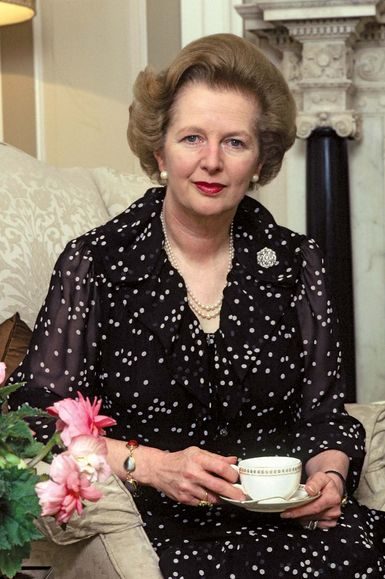
The situation changed with the arrival of Prime Minister Margaret Thatcher. His conservative government (1979-90) reversed course. Many public companies were privatized. Assets are transferred from public hands to private investors. The goal of the change is to increase efficiency and reduce government debt.
France followed the same path. After the war, the French government implemented an extensive program of nationalization. These include banks, insurance companies, financial institutions and manufacturing companies. Many of them have since been privatized. The pendulum swings back and forth.
US exception
There are very few public companies in the United States. Be careful with exceptions.
The Tennessee Valley Authority (TVA) is one of the examples of this type of initiative in the world. Founded in 1933, it remains a rare example of major national public infrastructure in the United States.
In 1970, the United States Postal System became a national corporation. Before that, it was a department of the executive branch. This change increases operational flexibility while maintaining public ownership.
Why is the United States different from Europe? Culturally, private entrepreneurship is strongly favored. The regulatory framework allows private companies to provide essential services. The country makes the rules. We are not normally open for business.
Structure and autonomy of the organization
Public companies are designed to operate in the public interest. This goal creates tension.
How to reconcile close political control and complete management autonomy? This is an ongoing organizational and business problem.
In Great Britain, the form public corporation is widely used. Other countries followed suit. Its powers are defined by special acts of the parliament. An administrative structure will be established. Clarify relationships with government agencies. The company has the status of a legal entity.
Its capital requirements are met by the Ministry of Finance. However, you must cover the recurring expenses through normal business activities. Employees are not civil servants. The top management is usually appointed by the responsible minister.
Another common form of organization is state-owned enterprise. It is an ordinary joint-stock company whose shares are wholly or partially owned by the state. This structure allows for some market flexibility while maintaining state control.
Fight for efficiency
Public companies usually intend to generate profits over a long period of time. Reality often complicates this goal.
The pricing policy may be subject to political restrictions. These restrictions conflict with economic sustainability. They can also receive implicit subsidies for social reasons. They can enjoy additional protection that their competitors do not offer.
These factors distort normal business operations. They often lead to managerial confusion. Managers strive to balance social tasks and financial goals.
As a result of these non-profit aspects, public companies can appear very inefficient. Public funds can be depleted during difficult trading conditions. Critics argue that private companies are inherently more efficient. Proponents argue that the social goals justify the costs.
Measuring the efficiency of public companies is not an easy task.
When producing a sellable product, such as coal or steel, its performance can be evaluated using normal business profit criteria. The competition offers clear standards.
Economists have proposed concepts such as cost-benefit analysis as performance measurement tools for utility companies that enjoy monopoly power. Profit is not the only metric. Social value is important.
In recent years, many state-owned enterprises in developed countries have received financial targets. These goals take social and corporate responsibility into account. The goal is to bridge the gap between public services and private efficiency.
The conversation continues. Is state ownership a burden or a necessity? The answer depends on what is most important to you. Selection of services. Affordable price. efficiency. innovation.
You can’t have everything. The options are still there.


