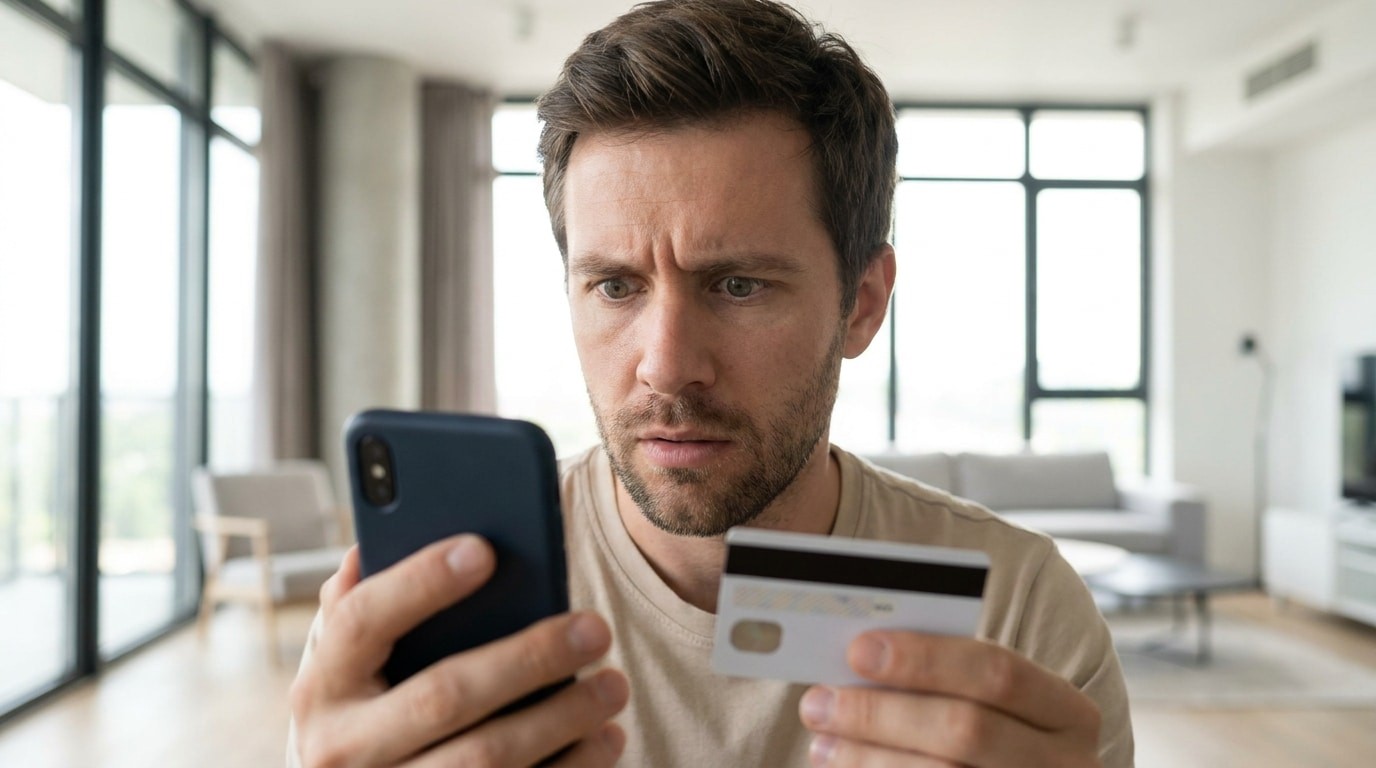
Receiving a new debit or credit card in the mail usually feels like a minor administrative task. It’s summer. You are thinking about gardening. You are thinking about doing nothing. But beneath that small, black-and-white square printed on the paper sits a threat. The fake card scam is everywhere right now. It targets savers directly. Scanning a new technology to save time can turn into a financial nightmare. The methods used by fraudsters are reaching a level of sophistication that shakes even the most secure institutions. Usurpers are now competing in hidden ingenuity to siphon capital before you even use the card for the first legitimate purchase.
The Mailer That Almost Cost Me Everything
The trap snaps shut in the quiet peace of your mailbox. The envelope bears the official logo. The paper has a heavy weight to it. The typography matches standard bank letters perfectly. Inside, a brand-new plastic card waits. It comes with a document suggesting you scan a QR code to activate it immediately.
This promise of simplicity is an irresistible bait for impatient consumers. Like a gardener tempted by cheap chemical fertilizer without reading the label, the deceived person sees a miracle of speed. They see ease. They don’t see the trap. The geometric labyrinth of that small code leads directly to a counterfeit platform. Confidential information follows. The old security cryptogram. The personal PIN. You enter them conscientiously. In good faith.
This routine gesture hands the keys to your family’s wealth directly to shadow scammers.
“The trap snaps shut in the quiet peace of your mailbox… The geometric labyrinth of that small code leads directly to a counterfeit platform.”
The Call That Stopped the Bleeding
The alert rarely comes from the victim. It comes from the bank’s internal monitoring systems. Financial institutions watch every suspicious monetary movement. They do this with the same meticulousness used to track harmful mold creeping between urban garden rows.
Once the malicious document is scanned with your smartphone lens, tiny, discreet micro-transactions begin. These happen in distant countries. They are just a few cents. They act as cover tests. They are perfectly discreet before launching massively destructive operations against your credit balance.
This is when the urgent authentication call rings. It is painful. It signals the undeniable gravity of the situation in real-time. The verdict comes from across the globe. The main account is now a digital sieve. It cannot hold its fluids.
Total blocking of dormant funds. Strict immediate document opposition. These are the only viable defenses to stop the emerging financial hemorrhage. This drastic safeguard procedure leaves the user temporarily without any valid monetary action. Especially during the unsafe preparation for the upcoming summer season.
The card is useless. The money is gone. And you are left waiting.
You trust the two-factor authentication on your banking app. You think that little SMS code is your digital moat. It isn’t. It’s a trap.
The threat has a name now: quishing. It sounds like a tech buzzword, but it’s just phishing with a QR code attached. Attackers use this contradiction to slip past modern security protocols. They exploit the gap between how we see a QR code and how we’ve been trained to distrust email links. The result is silent account takeover. Your savings get linked to a fraudster’s device. The temporary verification codes sent to your phone? Intercepted. Your “multifactor” security becomes porous.
The Mechanics of the Trap
The strategy relies on deception. It’s not brute force. It’s social engineering wrapped in a scannable image.
Step 1: The Postal Drop
Attackers print fake documents. These look legitimate. Maybe a bank statement. Maybe a utility bill. The key is the QR code embedded within. It’s a lure. When you scan it, you don’t go to the real bank. You go to a compromised interface. You’re entering your credentials into a corrupted portal. You’re giving away the keys to the vault voluntarily.
Step 2: The Test Transaction
Before going big, they test. A small transaction. A few cents. It’s not about the money here. It’s about confirmation. The bank system processes it. It flags no anomalies because the amount is negligible. This validates the compromise. The account is live. The link between your profile and their mobile device is active. You’ve authorized it silently.
Step 3: The Mass Drain
Once confirmed, the floodgates open. Large purchases follow. Often in bulk. Equipment. Goods shipped abroad. This happens without further intervention. The attacker bypasses the biometric checks usually required for major transfers. Your app’s security features are short-circuited. The withdrawals happen in a digital tunnel you can’t see until it’s too late.
Why Standard Defenses Fail
Most people assume that if they have SMS verification, they are safe. Quishing breaks this assumption.
When you scan a malicious QR code, you are often redirected to a login page that mimics your bank. You enter your password. Then, the system triggers a login attempt from a new, unknown device. The bank sends an SMS code to you. You receive it. You type it in. The attacker, who is sitting on the other end of the phishing page, sees that code in real-time. They enter it. The login succeeds.
The SMS code doesn’t prove you are at the keyboard. It proves you have access to the phone number on file. If the attacker controls the session, they control the outcome. The barrier is gone.
The Aftermath
By the time you notice, the damage is done. The account might be frozen by your bank’s remote control systems, but the funds are already gone. The attacker has moved the money through rapid, high-volume transactions. Recovering it is difficult. The trail leads overseas. The money vanishes into international electronics markets or digital wallets.
This isn’t a hypothetical risk. It’s an operational reality for anyone who scans codes from unverified physical sources.
How to Protect Yourself
The defense isn’t complex. It’s behavioral.
Stop trusting the image. A QR code is just a URL in a fancy wrapper. Treat it with the same suspicion as an email attachment.
Verify independently. If a document includes a QR code that asks you to log in or verify identity, do not scan it. Call the number on the back of your physical card. Type the URL directly into your browser. Do not use the code.
Monitor transaction limits. Some banks allow you to set lower limits for contactless or online transactions. Use them. If the test transaction had been blocked by a low-limit cap, the attacker might have given up.
Watch for subtle inconsistencies. Quishing works because it’s fast. You scan. You enter. You forget. Slow down. If a code prompts you to authorize a device login, pause. That’s the moment of compromise.
The technology evolves. So do the criminals. They don’t break in anymore. They get invited in, by mistake, through a square you scanned on a piece of paper. The security you rely on is only as strong as your decision to scan it.
That cold sweat in your chest when you see a mysterious envelope? It’s your gut telling you something is wrong. And it’s usually right.
Scammers are getting sophisticated. They don’t just ask for your password anymore. They send you a physical letter that looks official. A card. A letter. A notice. If you aren’t vigilant, you hand them the keys to your financial life.
The defense isn’t complicated. It’s boring. It’s skepticism. It’s refusing to trust anything that arrives in your mailbox unless you can verify it through a channel you chose, not one they provided.
The physical giveaway: Stop scanning random letters
Here is the trap. You get a letter. It says your card is arriving. Or expiring. Or being replaced. It includes a QR code.
Do not scan it.
Real banks do not ask you to validate a new card by scanning a QR code in a physical letter. They might send a letter to say “your card is coming,” but they will not ask you to activate it via a link or code in that same letter. If you scan that code, you aren’t talking to the bank. You’re talking to a server in a country where fraud is a thriving industry.
“A legitimate institution will never delegate the sensitive step of validating a new plastic card to an opaque external link.”
If you receive a mysterious letter that feels off—the paper quality is weird, the logo is slightly blurry, or the language feels stiff—do not try to “verify” it by interacting with the letter itself. Destroy it. Cut it up. Throw it away.
Check the details before you panic
If you are worried, compare the suspicious mail with an old letter you know is real. Look at the printing. Real bank mail uses high-quality paper and sharp ink. Scammers use cheap printers. The logos might be pixelated. The address might have a typo.
If you have to ask, “Is this real?” the answer is probably “no.”
Never automatically digitize a document that promises financial miracles. If a letter claims to unlock features or fix an account error, ignore it. Go to your bank’s app or website. Type the URL yourself. Do not click links in emails or letters.
What to do if you’ve already clicked
If you scanned the code and entered info, or if your card was damaged and you’re worried about fraud, speed matters.
You have a window. Eight weeks. That is the maximum time you have to formally contest a debit you didn’t authorize. Don’t wait. Contact your bank immediately.
The law is on your side here. Banks are legally obligated to protect your funds. They must guarantee your money. If a transaction is fraudulent, the bank has to fix it. But they can’t fix it if you wait until the money is gone and the ghost is long gone.
The bottom line
- Inspect the mail: Compare it to old, verified letters. Check the print quality.
- No scanning: Never scan a QR code in a letter. Ever.
- Direct action: Use the bank’s official app or website. Never use links in mail.
- Act fast: You have eight weeks to dispute fraudulent charges. Use that time.
Skepticism is the best security tool you own. It’s free. It’s always available. And it works better than any app.
The High Cost of Digital Illusions
Most people think financial security comes from a steady paycheck or a balanced portfolio. They are wrong. In the modern digital landscape, security is a constant, grinding effort to maintain a sterile, controlled environment for your virtual life. It is the only way to stop hard-earned money from evaporating. Think of your savings like a private garden. You guard it. You keep it clean. You do not spray it with toxic chemicals just because someone suggests it might “boost growth.” You keep it safe from invaders.
Right now, that invasion is invisible.
Behind the scenes, faceless corporate structures are deploying creative, ruthless tactics. They operate in the shadows, leaving no human face to blame. The banking systems are mutating. The procedures are shifting so fast that most people cannot keep up. Your ability to critically analyze these changes is your only defense. It is your shield.
The QR Code Scam Crisis
But the threats are no longer just theoretical. They are emerging daily. They are sophisticated. They are dangerous. And they are targeting the uncertainty created by modern financial technology.
The biggest issue right now is the proliferation of fake QR codes. Millions of people receive them. They appear in homes. They cause immediate distress. They look official. They are not.
Why isn’t there stricter regulation? Why are these scammers allowed to distribute these false images with total impunity? The system is opaque. It is easy. It is widespread.
Why Regulation Lags Behind Innovation
Financial innovation moves faster than law. That is the core problem. When a new technology emerges—like mobile payments or instant transfers—scammers are already there. They are building traps. They are using finesse. They are exploiting the “gray margins” where rules have not yet been written.
Banks and governments are slow to react. By the time a rule is proposed, the scammer has already changed tactics. This lag creates a window of vulnerability. A window that scammers exploit ruthlessly.
The Human Cost of Digital Fraud
The impact is not abstract. It is personal. It happens in living rooms. It happens in kitchens. A person scans a code. They expect a legitimate transaction. Instead, they lose their savings. The distress is immediate. The recovery is often impossible.
This is not a minor inconvenience. It is a systemic failure. The current system allows these scams to flourish because it prioritizes convenience over security. It prioritizes speed over verification.
What Must Change
We need rigid, enforceable regulations. Not suggestions. Not guidelines. Hard laws. These laws must:
- Lock down the distribution channels for QR-based payments.
- Mandate real-time verification for high-risk transactions.
- Penalize banks and fintech companies that fail to protect users.
Until these measures are in place, the digital economy remains a wild west. And in the wild west, the weak get eaten.
The Reality of Digital Safety
You cannot rely on your bank to save you. You cannot rely on the government to protect you in real-time. You must assume that every digital interaction carries risk. That is the reality.
Your savings are precious. They took years to build. They are easily destroyed in seconds by a single mistake. A single scan. A single click.
The scammers are waiting. They are patient.