


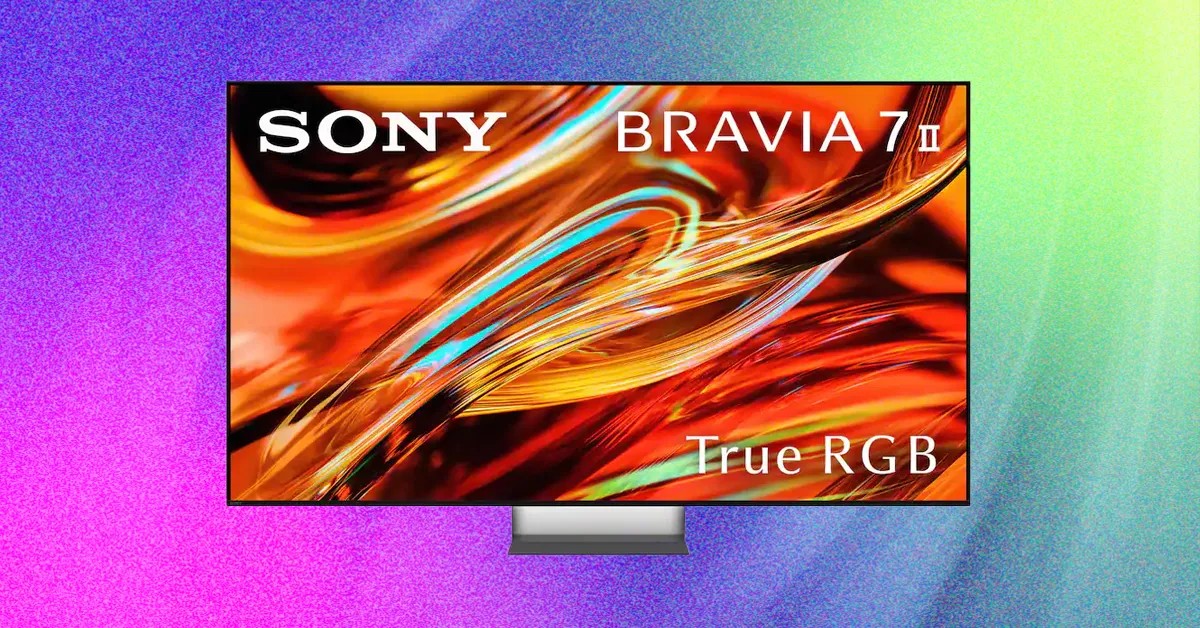
Mini and micro RGB LED TVs are finally here. The Sony Bravia 7 MarkII is leading the charge alongside the Hisense UR9 and TCL RM9L. It’s the future, sort of. The marketing jargon is already exhausting.
Sony calls their tech “True RGB.” They promise better contrast, insane brightness, more color volume. They claim it’s better than everything else. Then Samsung and LG jump in with “micro RGB” models. Suddenly no one knows what anything means. Sony even made RGB TVs back in 2004. That was a different time. Totally different tech.
Engineers might care about the distinction. The rest of us just want to know if it looks good. Mini and micro RGB TVs put tiny red, green, blue LEDs behind an LCD panel. “Micro” implies the LEDs are smaller. That allows for better control at the pixel level. Sony reps told WIRED that’s not true. The LEDs are the same size. Who’s right? Doesn’t matter yet. What matters is the price tag.
This TV sits in the “midrange” category. Only because the Bravia 9 MarkII costs significantly more. The 65-inch Bravia 7 costs $2300. The Bravia 9 hits $3600. That’s a massive gap for a screen that shares the same core panel tech.
Yes, the Bravia 9 has better speakers. Deeper blacks. More perks. But the underlying engine is the same. The Bravia 7 still has the good stuff though. Nvidia G-Sync support. The Sony Pictures Core app. Imax Enhanced movies still look killer here. Size options range from a modest 50 inches up to a monstrous 98-inch behemoth. That’s the widest range in the class.
But the technical word salad doesn’t fix the real problem. The Bravia 7 just didn’t beat its competition.
The Floating Illusion (That Fails)
It looks nice. Minimalist. A thin 2.25 inch bezel. It mimics the Bravia 5 closely enough to feel familiar. Until you look at the stand.
Sony replaced two traditional feet with a “Mirage Stand.” One single foot attaches to the bottom. A clear plastic plate sits underneath. The idea? The TV should look like it’s floating in midair. Poetic. Elegant.
Reality? The plastic looks foggy. Cloudy. Visible. You see the plastic. Not the illusion. It feels like a relic from those old RGB sets twenty years ago. Shame on them.
Assembly is a headache. The parts don’t make logical sense. I hate using screwdrivers for TV stands. Snap-on designs like Samsung use? Those are instant wins. Here you attach prongs. Then attach the base. It’s fiddly.
Getting it online wasn’t much smoother. The Google Home QR code scanner failed. Completely. I had to type in my email and password manually. Annoying friction for day one. After that? Smooth sailing. Setup took ten minutes. Apps installed. Defaults accepted. Done.
The remote is compact. Volume and channel buttons are obvious. Netflix. Prime. Core. All where you’d expect. The Home button? Hidden on the right side. Weird. Why move the most used button away from center? Bad ergonomics.
Look behind the screen. Four HDMI ports. But only two are HDMI 2.1. No DisplayPort. The Hisense UR9 has one. The UR9 does 180Hz refresh rates. This Sony tops out at 120Hz for PCs. There is a coax port for antenna cable. Two USBs for hard drives. Basic. Adequate. Boring.
Some features are just there to be ignored. XR Contrast Booster does nothing. “Reality Creation” promises to fix old SD footage. I fed it YouTube videos. They stayed ugly. There is a physical switch for the mic underneath. Security paranoia? Maybe. It’s nice to have.
Colors. Or lack thereof.
I assumed the “True RGB” marketing meant a visual upgrade. The results? A mixed bag at best.
My skin tones were off. Spears & Munsil tests revealed light skin looking too dark. Dark skin washed out. The “Photo” mode helped. Mostly by cranking the brightness up. That’s not color accuracy. That’s just lighting.
A demo reel highlighted the weakness. Mist over mountains? Gray and flat. Green grass? Meh. Brown buffalo? Just brown. Dark scenes lack depth. Trees blend into backgrounds.
Netflix’s Awake looked dull. The protagonist rides a bike at night. I could see her face. I couldn’t see the background. Couldn’t see the guy in the blue shirt. It wasn’t cinematic darkness. It was just low contrast failure. Same with The Creator.
Animated content helped sell the premise a bit. Hoppers on Disney+ looked great. The vibrant colors popped. Then again. My iPhone 17 Pro showed the same scene beautifully too. Hard to tell if the TV was doing the heavy lifting or just matching my phone.
Project Hail Mary felt restrained. Like matte art on a canvas. Subtle. But too subtle for a living room screen.
Streaming Dune Part Two on HBO Max worked perfectly. Unlike the Hisense which glitched out occasionally. Sports on YouTube TV? Fluid motion. World Cup 2026 matches were sharp. Colors vivid. But news broadcasts? Flat. Washed out. A screensaver mode showed static artwork. Too dark. Shipwreck oil paintings looked muddy.
Sound? I hooked up Klipsch The Nines II speakers. Unbroken roared. Dolby Atmos filled the room. Planes. Explosions. Voices. Immersive. But here is the kicker. The built-in speakers on that same Hisense UR9 outperform the Bravia’s internal audio. Sony lost the audio war for budget setups.
Gaming Mediocrity
Games lack punch.
007 First Light on PC showed potential. Vietnam level. Sun on water. Contrast was actually good. Bright spots popped. But shadows? Dead. Bond drove into darkness. The contrast collapsed. Washed out details. The 120Hz refresh rate helped. Smooth. But not as crisp or responsive as the Hisense.
Xbox Series X fared slightly better but still underwhelming. Forza Horizon 6. White BMW M4 on snow. The whites felt muted. Matted. Sony promises “anti-glare” tech. “X-Wide Angle.” Sure. The view from the couch is decent.
Senua’s Saga: Hellblade II and Subnautica 2? Too dark. Contrast struggled in shadowy caves and deep oceans. I had to fiddle with brightness settings to make them watchable. I did love the color accuracy though. Red. Blue. Convincingly real when they appeared.
Here is the problem. The RGB tech is real. Colors are accurate. But this is a midrange TV with a flagship attitude. It sits at $2300 for a mid-range performance tier. That’s steep. Samsung, LG, TCL, Hisense all offer better value.
If the price drops significantly. Sure. Consider it. You get the Sony ecosystem. You get the software polish. For now? Don’t overpay for marketing buzzwords. Wait for a sale. Or look elsewhere.
The future of RGB is here. This specific model just isn’t leading the pack.


