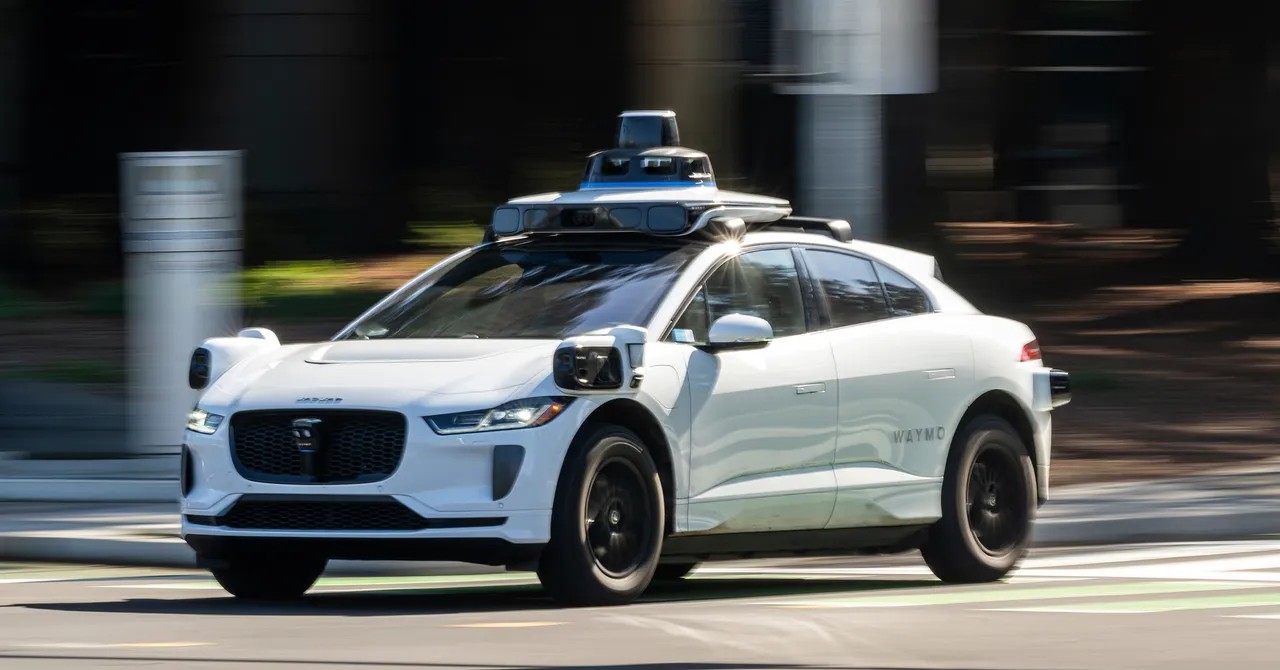
Emergency services leaders in San Francisco and Austin have raised urgent alarms with federal regulators, stating that Waymo’s driverless vehicles are becoming a growing hazard. According to a private meeting recorded by WIRED, firefighters, police officers, and paramedics report that autonomous cars are increasingly freezing in traffic, blocking emergency access, and failing to respond to human commands.
This backlash comes at a critical juncture for the self-driving industry. As Waymo expands its fleet to ten U.S. cities and plans international launches, these complaints threaten to stall regulatory approval in other major markets. The core issue is not just mechanical failure, but a fundamental disconnect between complex algorithms and the unpredictable nature of real-world emergency scenarios.
A Regression in Safety Performance
The concerns were voiced by officials from two of the most established autonomous vehicle zones: San Francisco and Austin, where Waymo has operated for over a year. Contrary to the expectation that technology improves with time and data, first responders argue the opposite is happening.
Mary Ellen Carroll, Executive Director of San Francisco’s Department of Emergency Management, told the National Highway Traffic Safety Administration (NHTSA) that the company is experiencing a “backsliding” in performance. She noted an increase in traffic violations and operational errors that had previously been resolved.
“We are actually seeing something interesting: backsliding of some things that had improved upon,” Carroll stated. “They are committing more traffic violations. “
Patrick Rabbitt, Chief of the San Francisco Fire Department, highlighted a specific and dangerous trend: Waymo vehicles frequently block fire station entrances. He described the cars’ default behavior when confused as “freezing,” which prevents firetrucks from departing for emergencies in a timely manner.
The “Human Element” Problem
A recurring theme in the complaints is the difficulty of interacting with the vehicles during crises. Lieutenant William White of the Austin Police Department argued that the technology was deployed too rapidly, before it could adequately handle human interaction.
White pointed out that Waymo cars often fail to recognize standard police hand signals, such as those used by motorcycle officers to direct traffic. This lack of “social awareness” leads to dangerous standoffs.
“The human element is what’s killing them,” White explained. “The moment you introduce the human element, [the vehicles] lack that social awareness of what to do, and they freeze.”
This issue extends to remote support. Assistant Chief Nicole Jones of the San Francisco Police Department reported frustration with having to stick their heads into robotaxis to speak with Waymo’s remote operators. Her department has advocated for exterior microphones to facilitate communication, a feature that currently seems absent or ineffective.
Real-World Consequences
These operational glitches have had tangible impacts on public safety and city infrastructure:
- Blocked Emergency Access: In Austin, a Waymo vehicle blocked an ambulance for two minutes while it responded to a downtown shooting that killed three people. While remote operators eventually moved the car, officials noted that connection times can take up to three minutes, causing critical delays.
- School Safety Violations: The Austin Independent School District reported incidents where Waymo cars passed school buses with stop arms extended and lights flashing, endangering children.
- Infrastructure Failures: During a December power outage in San Francisco, over 1,000 Waymo vehicles were stranded at intersections without traffic signals. More than 60 had to be manually retrieved, and in one case, a 911 operator waited 53 minutes to reach Waymo support.
Mary Ellen Carroll emphasized the strain on emergency services: “Anything that brings a high volume of calls to 911 around these kinds of things can delay response, delay our call time for people that have true life-and-death situations.”
Political and Expansion Challenges
Waymo’s expansion plans are ambitious. The company recently announced it provides 500,000 paid rides weekly—a tenfold increase from last year—and aims to launch in ten more cities, including London, by year’s end. However, the scale of the rollout is facing pushback.
Political opposition is rising in major urban centers like Boston, New York City, Seattle, and Washington, D.C., particularly from labor unions concerned about job displacement and safety. The recent comments from first responders provide ammunition for critics who argue that the technology is not yet ready for dense urban environments.
Waymo maintains that its vehicles reduce serious crashes compared to human drivers. Spokesperson Julia Ilina stated that the company values its partnership with first responders and has trained over 35,000 emergency personnel nationwide. However, the company declined to attend a recent Austin City Council meeting regarding the shooting incident, leaving two reserved seats empty.
Conclusion
The friction between Waymo’s rapid expansion and the practical realities of emergency response highlights a critical gap in autonomous vehicle development. While the technology may reduce certain types of accidents, its inability to reliably navigate human-led emergencies poses new risks. Until these “human element” failures are resolved, the trust of first responders—and the public—will remain fragile.