


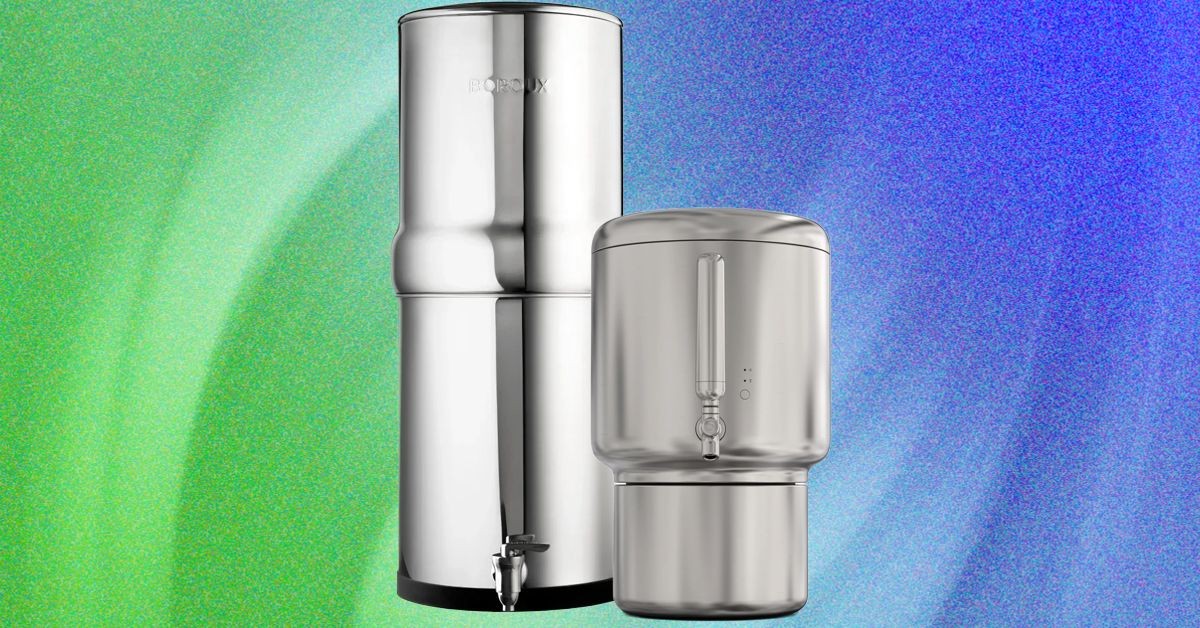
For years, large, stainless steel gravity-fed water filters have been gaining traction among both survivalists and wellness enthusiasts. While some saw them as status symbols, recent research on microplastics in drinking water has shifted the focus: these filters now offer a compelling solution to avoid plastic contact entirely. This review pits two leading contenders, the Boroux Legacy and the Rorra Countertop System, against each other in a head-to-head test of performance, convenience, and quality.
The Rise of Gravity Filters: Why Now?
Gravity-fed filters emerged from brands like British Berkefeld and Berkey, initially popular with those seeking off-grid water purification. However, recent studies revealing the ingestion of tens of thousands of microplastic particles from bottled water and plastic pitchers prompted a demand for plastic-free alternatives. Newer models, like Boroux and Rorra, aim to meet this need by minimizing or eliminating plastic in contact with filtered water.
Boroux Legacy vs. Rorra Countertop: Key Differences
The Boroux Legacy ($419) is a product of a former Berkey distributor facing regulatory challenges. The Rorra Countertop System ($549) is a newer, celebrity-endorsed filter featuring smart sensors for water and filter levels. Both promise high-performance filtration, but their approach and execution differ significantly.
Testing involved assessing setup, plastic content, chlorine reduction, dissolved solids, pH changes, and validating NSF/ANSI certifications alongside independent testing results.
Performance: Boroux Takes the Lead
The Boroux Legacy consistently outperforms the Rorra in third-party testing and certifications. It holds NSF certifications for microplastic and particulate filtration, and independent tests confirm its efficacy against PFAS, heavy metals, and chlorine. The Boroux reduces total chlorine by over 95%, yielding clean-tasting water.
- NSF-certified microplastic and particulate filtration
- Independent testing confirms yearlong filtration of PFAS, heavy metals, and chlorine
- Aesthetically pleasing design
However, the Boroux isn’t without flaws. Its bulky design requires significant counter space, setup is tedious, and priming the filter can be messy. The lack of sensors for filter or water levels also means manual monitoring is necessary.
Plastic Content: A Clear Advantage
Both Rorra and Boroux have drastically reduced plastic in their designs. Boroux stands out with certification for microplastic filtration, ensuring minimal plastic contact with filtered water. While some plastic elements remain in the form of stoppers and base components, the system is designed to remove 99% of microplastics, mitigating the risk.
Convenience: A Trade-Off
Gravity-fed systems trade convenience for capacity. The Boroux’s 3-gallon capacity provides a day’s worth of water for most families, reducing the need for constant refills. However, the system filters slowly (over three hours for a full tank) and requires overnight refills for optimal use. The Rorra, with its smart sensors, offers a slightly more convenient experience but lacks the same rigorous testing behind its performance claims.
Setup and Priming: A Pain Point
Setting up the Boroux is straightforward in theory, but priming the activated carbon filters is an obnoxious process. Manual priming involves forceful water flow to remove excess carbon, which can leach into the water. An optional automatic priming pump ($40) automates this, but adds an extra cost. Total setup, including priming, can take up to four hours.
Long-Term Costs and Maintenance
Boroux filters advertise a year-long lifespan, but independent testing shows PFAS and heavy metal reduction declines after 800 gallons. Replacement filters cost $150, making long-term ownership expensive. However, the filters can be scrubbed and re-primed, extending their lifespan beyond the recommended timeframe.
The Berkey Factor: Regulatory Battles and Alternatives
Berkey, the original gravity-fed giant, faces legal challenges with the EPA over antimicrobial claims. This has spurred competitors like Boroux, who previously distributed Berkey filters, to develop compliant alternatives. Boroux’s filters use the same formulation as original Berkey black filters but avoid aggressive antimicrobial claims to stay within regulations.
The Verdict: Boroux is the More Reliable Choice
The Boroux Legacy emerges as the superior countertop gravity water filter. It offers the most extensive third-party testing, NSF certifications for particulate and microplastic removal, and proven efficacy against contaminants. While bulky and slow, its performance outweighs convenience drawbacks. For those prioritizing clean water without plastic contact, the Boroux Legacy is the clear winner.
- Performance and certifications: 8/10
- Plastic content: 9/10
- Convenience: 6/10
Ultimately, choosing between Boroux and Rorra depends on your priorities. If you seek the most rigorously tested, plastic-free water filter, the Boroux Legacy delivers. If convenience and aesthetics are paramount, the Rorra may offer a more appealing experience, but at the cost of verified performance.


