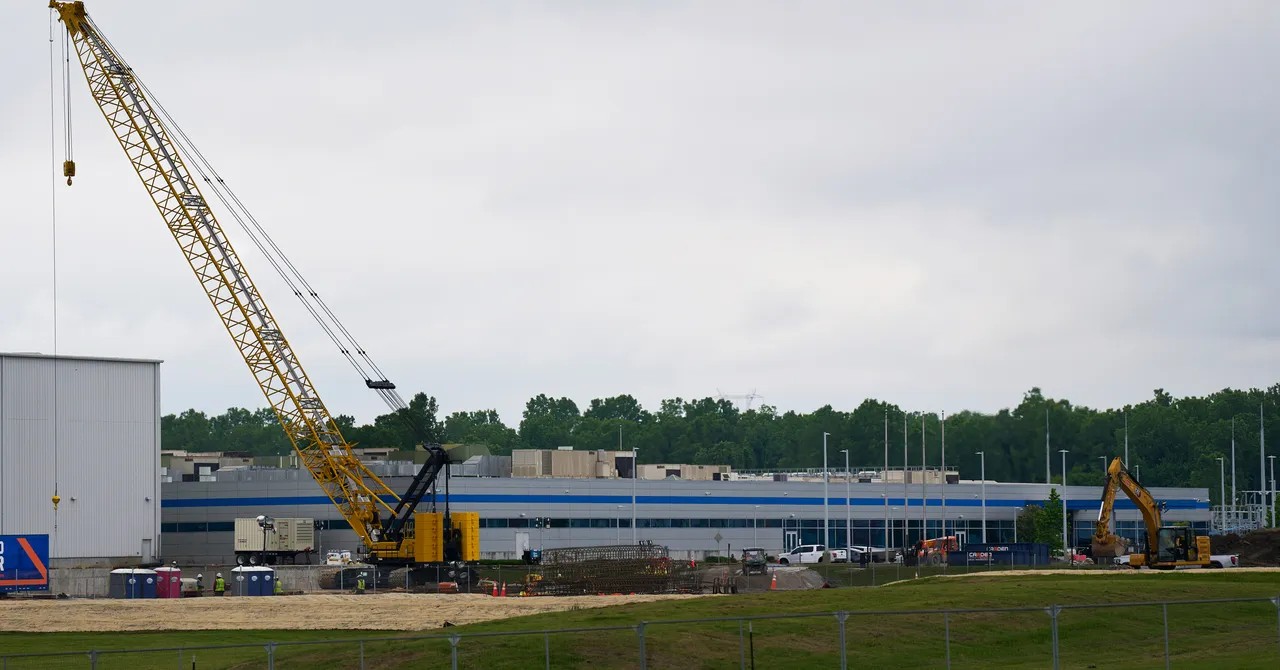
Anthropic has entered into a significant computing partnership with Elon Musk’s merged entity, SpaceXAI, securing access to massive processing resources at the latter’s Memphis, Tennessee data center. The agreement, announced at Anthropic’s developer conference in San Francisco, grants the AI lab access to Colossus 1, one of the world’s most powerful supercomputers.
This collaboration marks a notable shift in the competitive landscape of artificial intelligence. It provides Anthropic with critical infrastructure to alleviate service bottlenecks while offering SpaceXAI a high-profile customer to bolster its credibility ahead of a potential public listing.
A Strategic Pivot in the AI Hardware War
The deal addresses a pressing bottleneck in the AI industry: the severe shortage of computing power required to train and run large language models. Anthropic will draw power from Colossus 1, utilizing approximately 220,000 Nvidia GPUs —including H100, H200, and the newer GB200 chips. This capacity translates to more than 300 megawatts of new computing power for Anthropic.
The timing is strategic for both parties. For Anthropic, the partnership directly targets infrastructure constraints that have led to recent rate limits and service disruptions for users of Claude Pro, Claude Max, and Claude Code. With developers reportedly spending over 20 hours per week using Claude Code, the demand for reliable, high-throughput computing has never been higher.
For SpaceXAI, the partnership serves as a validation of its infrastructure capabilities. The company, formed by the merger of SpaceX and xAI earlier this year, is preparing for an initial public offering (IPO) potentially as soon as next month. Securing a leading AI lab as a customer helps demonstrate market demand for its expensive data center projects, including ambitious plans for orbital AI compute capacity —essentially, data centers in space.
From Public Criticism to Collaboration
The partnership represents a dramatic reversal in the public relationship between Elon Musk and Anthropic’s leadership. Earlier this year, Musk publicly criticized Anthropic’s safety policies on X (formerly Twitter), labeling them “misanthropic” and “evil,” and alleging unproven biases in their models.
However, Musk recently softened his stance, stating he had spent time with senior Anthropic team members to understand their safety protocols. He noted being impressed by their efforts to ensure their model, Claude, remains beneficial for humanity. This diplomatic thaw highlights the pragmatic nature of the AI industry, where competitive rhetoric often gives way to necessary collaboration when infrastructure becomes the limiting factor.
Context: The Global Race for Compute
Anthropic’s move to partner with SpaceXAI does not signify an exclusive reliance on Musk’s hardware. The company is simultaneously diversifying its infrastructure portfolio to mitigate risk:
- Google: Anthropic has committed to spending $200 billion on Google’s AI cloud services and Tensor Processing Units (TPUs).
- Amazon: The company has used Amazon’s cloud services since 2023 and recently committed over $100 billion to Amazon technologies over the next decade.
These massive contracts underscore the scale of capital flowing into AI infrastructure. According to recent reports, deals with Anthropic and OpenAI now account for more than half of the $2 trillion in backlogs at major cloud providers like Amazon, Microsoft, and Google. This indicates that the industry is not just building models, but fundamentally restructuring the global energy and hardware supply chain to support them.
Environmental and Local Concerns
While the technological implications are significant, the physical footprint of these data centers raises ongoing concerns. The Colossus 1 facility, built on a former Electrolux site in Memphis, has faced local backlash due to emissions from its gas turbines. Environmental protesters recently demonstrated at a nearby SpaceX investor gathering, highlighting the tension between rapid technological expansion and environmental sustainability.
Key Insight: The merger of SpaceX and xAI into SpaceXAI creates a unique vertical integration, combining satellite launch capabilities with ground-based and potentially orbital computing. This positions the company to offer end-to-end infrastructure solutions, from data generation to processing, in a market where compute scarcity is driving up costs and consolidating power among a few major players.
Conclusion
The partnership between Anthropic and SpaceXAI illustrates the evolving dynamics of the AI race: competition is fierce, but cooperation is essential for scaling. As hardware becomes the primary constraint on innovation, companies are forming strategic alliances to secure access to the massive energy and computing resources required to power the next generation of artificial intelligence.