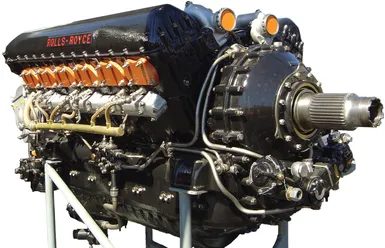
The image of a Rolls-Royce Merlin engine sitting in Pearce Air Force Base near Perth, Western Australia, hints at a much heavier industrial legacy. Most people still associate the brand with chrome grilles and leather interiors. That association is a ghost from the past. The company we know today is an engineering powerhouse focused on aerospace, marine propulsion, and power generation. It is no longer making luxury cars.
The separation happened after the original car-making division collapsed. The company went into receivership in 1971. The UK government stepped in to nationalize the enterprise. It stripped away the automotive operations to save the core engineering business. This was a painful break. It defined the company’s modern identity. Rolls-Royce returned to private ownership in 1987. Its headquarters remain in London.
Dominance In Jet Engine Manufacturing
Today, Rolls-Royce PLC is a major British manufacturer. Its primary revenue driver is the aerospace segment. The company produces a wide range of civilian and military aircraft engines. They do this both independently and through joint ventures. These partnerships span Europe, the United States, and Japan.
The product lineup is specific and high-stakes. The Trent and RB211 turbofan families are central to their success. These engines power Boeing, Airbus, and Tupolev aircraft. The EJ200 turbofan is another critical product. It was developed specifically for the Eurofighter Typhoon. This level of technical specificity is what keeps the company competitive. It is not just about branding. It is about thermodynamics and materials science.
Beyond The Sky: Marine And Energy Systems
You might not realize the company’s footprint extends far below the flight deck. Rolls-Royce holds the title of the world’s leading supplier of marine propulsion equipment. This is not a minor side hustle. The scope ranges from complete ship design to integrated systems. They handle propulsion, maneuvering, and positioning. They also supply deck machinery.
The aerospace-derived technology trickles down into other sectors. The oil and gas industries rely on their gas turbines. The Royal Navy uses their nuclear power systems. These are not luxury items. They are critical infrastructure. The trade-off is clear. The margins might differ from aviation, but the stability and scale are significant.
The shift from car manufacturing to jet engines was not just a change of product. It was a survival strategy. The nationalization in 1971 forced a hard reset. The return to the private sector in 1987 locked in a new direction. The luxury car brand still exists, but it is owned by a different entity entirely. The Rolls-Royce on the London stock exchange is entirely different.
This bifurcation often confuses investors and consumers alike. The name recognition remains powerful. The underlying business, however, is grounded in heavy industry. It is about managing risk in complex global supply chains. It is about maintaining technological superiority in a few highly specialized niches. The Merlin engine in Perth is a relic. The Trent engine flying overhead is a reality. The gap between those two images defines the modern corporation.
How does this focus on aerospace impact the average consumer? It does not directly. You cannot buy their products. But it influences airfares, shipping costs, and military capabilities. The balance sheet is built on long-term contracts and high barriers to

The Engineering Legacy of Rolls-Royce and Bentley
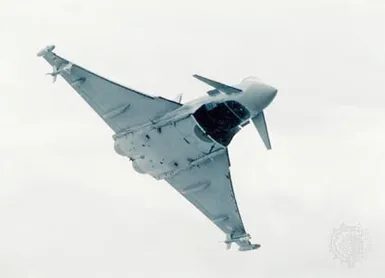
The Eurofighter Typhoon DA5 prototype stands as a testament to modern European aerospace cooperation. This twin-engine jet fighter is the product of a multi-national effort to build a next-generation multirole combat aircraft. Its lineage began with the DA1 prototype taking its first flight in 1994.
But the engineering pedigree that feeds into such complex machines often traces back much further. Consider the automotive history that defined luxury for a century. It started with Frederick Henry Royce. He founded F.H. Royce and Co. in 1884. The firm made dynamos, electric motors, and cranes. By 1899, it was renamed Royce Ltd.
Royce built his first motor car in early 1904. This move changed everything. He needed a distribution partner. He found one in Charles Stewart Rolls.
Rolls had started C.S. Rolls and Co. in 1902. The business sold high-quality cars. The two men struck a deal. Rolls got the exclusive rights to sell Royce’s vehicles. The cars carried the combined name: Rolls-Royce.
The partnership worked. It led to the formation of Rolls-Royce Ltd. in 1906. They launched the six-cylinder “40/50 hp” automobile. This model became known as the Silver Ghost. It was produced from 1907 until 1925. The British motoring press called it the “best car in the world.” The reputation stuck.
Success bred more models. The Twenty followed, running from 1922 to 1929. Then came the Phantoms. Production began in 1925. By 1949, they were specially built for heads of state. Other notable models included the Silver Wraith (1947), the Silver Dawn (1949), the Silver Cloud (1955), the Silver Shadow (1965), and the Silver Seraph (1998).
In 1931, Rolls-Royce acquired Bentley Motors Ltd. Walter Owen Bentley had founded Bentley in 1920. After the acquisition, Bentley models gradually adopted the mechanical and design characteristics of Rolls-Royce cars. Minor details differed. The core engineering became identical.
For decades, Rolls-Royce only built the chassis and engines. Expert coachbuilders constructed the bodies. Customers had individual requirements. That changed in 1939. Rolls-Royce began manufacturing entire cars. The transition marked a shift in how the brand approached production and luxury.
The evolution from individual coachwork to integrated manufacturing mirrors the broader shift in engineering. Just as the Typhoon integrates systems from across Europe, Rolls-Royce integrated its supply chain. The result is a history defined by precision. The numbers don’t lie. From the 40/50 hp to the Phantom, the focus remained on performance. The brand didn’t just build cars. It built standards. Those standards still influence the market today. The legacy isn’t just in the metal. It’s in the expectation of what a vehicle should be.
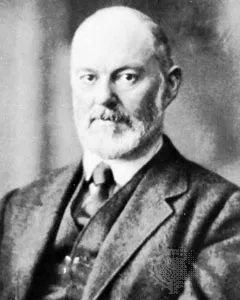

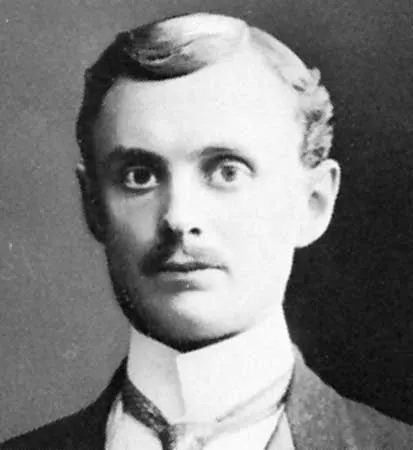

Sir Henry Royce. Charles Stewart Rolls. Two names that defined automotive luxury in the early 1900s. But their company’s legacy didn’t stay on the road.
By 1914, Rolls-Royce had already pivoted to the skies. They produced their first aircraft engine, the Eagle. It wasn’t a gamble. It was an inevitability. The engineering rigor required for a Rolls-Royce car translated naturally to aviation.
The real breakthrough came later.
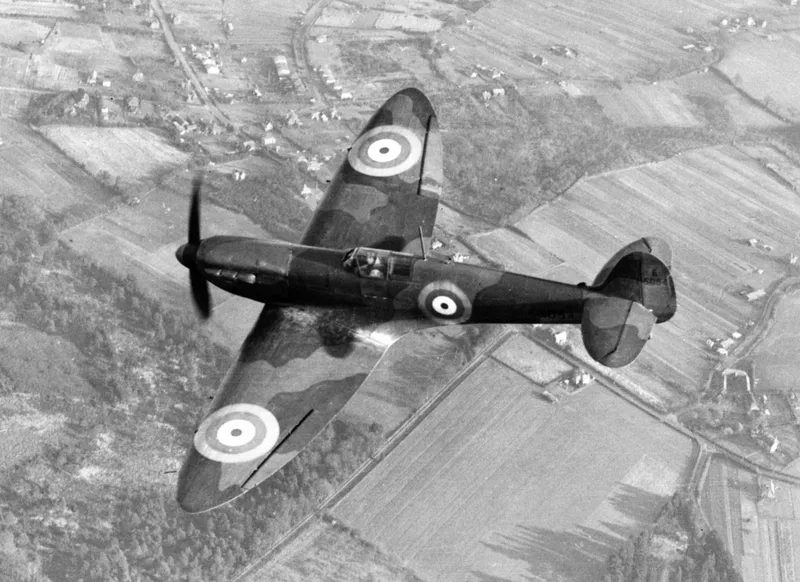
On the eve of World War II, Rolls-Royce introduced the Merlin engine. Water-cooled. Powerful. It became the heart of the war effort. The Supermarine Spitfire flew because of the Merlin. The Hawker Hurricane relied on it. It stands as one of the most successful piston engines of the twentieth century.
But the war also accelerated a new kind of propulsion.
English aviation engineer Frank Whittle had been pioneering jet propulsion. Rolls-Royce built on his work. They designed the Welland. This was the first jet engine to enter military service. It flew in the Gloster Meteor in 1944. The shift from propellers to jets was underway.
The 1950s brought another milestone.
Commercial aviation needed efficiency. Rolls-Royce delivered the Dart turboprop engine. Developed for the Vickers-Armstrongs Viscount, it was the first turboprop to enter commercial service. Pilots and airlines trusted it. It changed how planes moved across continents.
Then came a major structural shift.
In 1966, Rolls-Royce acquired Bristol Siddeley Engines. This merger had happened in 1959, combining Bristol Aero Engines and Armstrong Siddeley Motors. Now, Rolls-Royce owned the pieces.
What did they get?
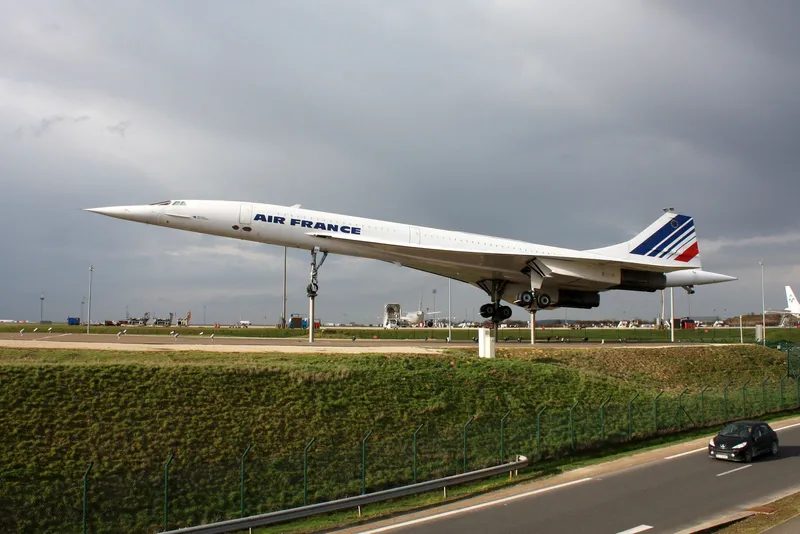
Two critical projects. The Pegasus engine. This vectored-thrust design powered the Harrier vertical/short-takeoff-and-landing (V/STOL) jet fighter. It could hover. It could land straight down. The Olympus engine, developed with France’s SNECMA. This powered the Concorde supersonic airliner. It could fly at twice the speed of sound.
These weren’t just products. They were statements.
Today, jet-engine operations constitute the largest portion of Rolls-Royce’s sales. The car business is a fraction of the weight. The company that started by building luxury sedans now powers the skies.
Why does this matter?
It shows how industrial capability evolves. Rolls-Royce didn’t just survive the transition from cars to planes. It dominated the transition. The Merlin, the Dart, the Pegasus, the Olympus. Each built on the last.
The engineering mindset remained the same. Precision. Reliability. Performance.
But the stakes were higher.
An engine failure in a car is inconvenient. An engine failure in a jet is catastrophic. Rolls-Royce learned this quickly. They invested heavily in testing. In materials. In safety.
This focus paid off.
The company’s jet-engine division grew to become its primary revenue source. The automotive brand remains iconic. But the money comes from the air.
It’s a different kind of legacy.
Less about status symbols on the ground. More about moving people and cargo across the globe. Safely


The RB211 Disaster and Corporate Split
The story of Rolls-Royce isn’t just about luxury cars. It’s a tale of engineering ambition colliding with financial reality. In the late 1960s, the company bet its survival on the RB211. This was a new, powerful jet engine designed to power Lockheed’s L-1011 TriStar wide-body airliner. The goal was simple: beat competitor General Electric.
To do so, Rolls-Royce management signed a fixed-price contract with Lockheed Aircraft Corporation. This was a massive gamble. The company drastically underestimated the development costs. The engineering challenges were far greater than anticipated. The financial hole dug by these miscalculations was catastrophic. In February 1971, Rolls-Royce declared bankruptcy.
The consequences were immediate and severe. The British government nationalized the company to meet its financial obligations. But this wasn’t the end. It was a forced restructuring. The conglomerate was split into two distinct entities.
First, there was Rolls-Royce Ltd. This entity held the jet-engine operations. Established in 1971, it became a government-owned corporation. It was pure aviation and defense engineering.
Second, Rolls-Royce Motor Holdings Limited was created in 1973. This part held the automobile and diesel-engine operations. It was returned to private stockholders. The split was clean. The engine makers and the car makers were no longer under one roof.
Strategic Acquisitions and Privatization
The 1970s and 80s were about rebuilding and expanding. Rolls-Royce Ltd. didn’t just sit idle. In 1980, it joined a consortium of European, American, and Japanese companies. They developed the V2500 turbofan engine for short-to-medium range jetliners. This move signaled a return to global competitiveness.
Meanwhile, the car side of the business changed hands. In 1980, Rolls-Royce Motor Holdings Limited was acquired by Vickers Ltd. Vickers was a British manufacturing and engineering giant with deep roots in defense. It converted to a public limited company in 1981. The Rolls-Royce automobile brand was now a subsidiary of an industrial conglomerate.
Back in the engine business, the tide turned. In 1987, the British government privatized Rolls-Royce Ltd. Shares were sold to private investors. The company changed its name to Rolls-Royce PLC. The state was out. The market was back in charge.
Three years later, in 1990, Rolls-Royce PLC partnered with German carmaker BMW AG. They formed a consortium to build small-to-medium jet engines. It was a strategic alliance between an aerospace leader and a precision engineering firm. By 2000, Rolls-Royce had taken full control of this joint venture. BMW received a 10 percent stake in the parent company in return. This wasn’t a buyout; it was a consolidation of power.
Expansion into Marine and American Markets
Rolls-Royce PLC didn’t stop at aviation. It looked elsewhere for growth. In 1995, it expanded its aircraft propulsion activities by acquiring Allison Engine Company. Founded in 1915, Allison was an American maker of gas-turbine engines. These powered aviation, industrial, and marine applications. The acquisition brought significant U.S. market presence and technology.
Two years later, in 1999, Rolls-Royce became a global leader in marine power systems. It achieved this by acquiring Vickers PLC. Vickers was a maker of maritime propulsion and stabilization systems, turbine components, and defense systems. This acquisition diversified the revenue streams away from pure aviation dependency. The company now held significant chunks of the marine engineering market.
But the automotive side remained a separate, complicated entity under Vickers Ltd. The brand value was immense. The manufacturing base was smaller. The tension between brand rights and operational control was about to explode.
The Battle for the Rolls-Royce Name
In 1997, Vickers announced it intended to sell its Rolls-Royce automobile subsidiary. This triggered a bidding war. Two German carmakers saw the value. Volkswagen AG and BMW AG both submitted rival bids. The stakes were high. The brand name carried decades of prestige.
Vickers’s shareholders favored Volkswagen. They saw volume and manufacturing scale. But engine maker Rolls-Royce PLC held the cards. The company owned the rights to the Rolls-Royce brand name and logo. This agreement was signed long before Vickers took control of the luxury-car maker.
Rolls-Royce PLC supported a sale to BMW. The logic was clear. BMW had the engineering pedigree. They understood precision. The engine manufacturer knew its partner better.
A novel agreement was struck in 1998. It was messy. It was complex. It was legally binding.
Volkswagen acquired the Rolls-Royce automobile operations from Vickers. They got the factory in Crewe, England. They got the existing workforce. They got the physical assets.
BMW acquired all rights to the name Rolls-Royce with respect to cars. They got the brand. They got the logo. They got the prestige.
BMW granted Volkswagen a license to make and sell automobiles under the Rolls-Royce brand. But there was a deadline. The license ran until the end of 2002.
After that date, BMW would make cars with the Rolls-Royce name. They would do so in a new factory. Not Crewe. Somewhere else.
Volkswagen had to pivot. It established Rolls-Royce & Bentley Motor Cars Ltd. as a subsidiary. The focus shifted to the Bentley car line. Bentley accounted for more than half of sales. The Rolls-Royce name was on the license plate, but Bentley was the volume driver.
This split defined the automotive landscape for the next two decades. One company owned the factory. The other owned the name. They coexisted for a while. Then they diverged.
The Legacy of the Split
The separation of the jet engine business from the car business in 1971 had long-term effects. It allowed each entity to focus on its core competencies. Rolls-Royce PLC became an aerospace and defense giant. It invested heavily in R&D. The RB211, once a liability, became a cornerstone of modern aviation. The V2500 and partnerships with BMW solidified its position.
The car business, however, became a branding exercise. Volkswagen owned the production. BMW owned the soul. The license agreement created a strange period of overlap. For four years, both companies sold Rolls-Royce cars. They used different platforms. They had different engineering philosophies.
Volkswagen’s strategy was clear. Use the brand to elevate Bentley. Build volume. Keep the factory in Crewe working. It worked. Bentley became a viable luxury brand on its own.
BMW’s strategy was