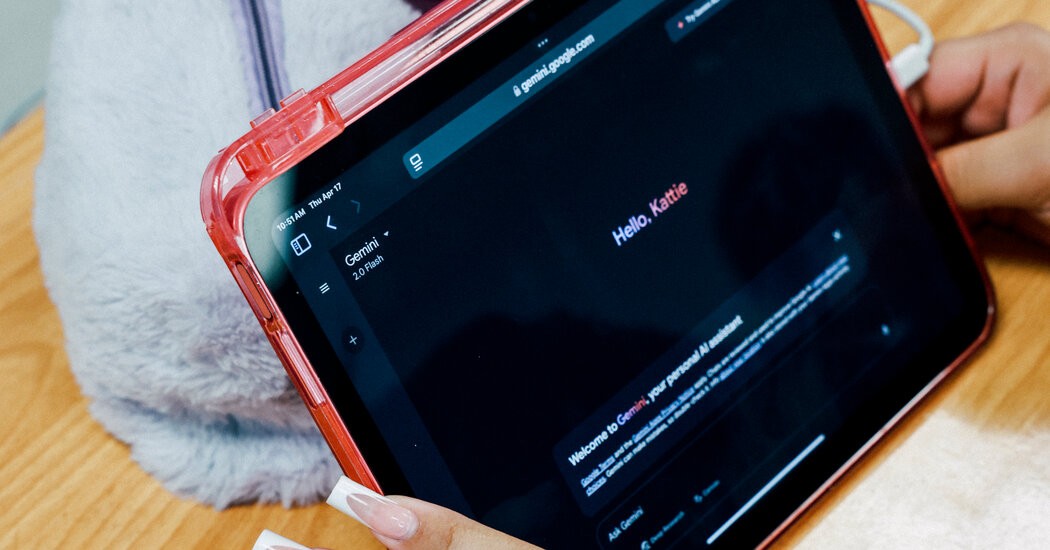
More than half of U.S. teenagers are now using artificial intelligence (AI) tools – including chatbots like ChatGPT and Copilot – to assist with their schoolwork. This represents a significant and rapid increase in adoption, raising questions about the evolving relationship between students and technology in education.
Rapid Growth in AI Usage
According to a new Pew Research Center study, 54% of teenagers aged 13 to 17 have used AI tools for academic tasks. These tasks include research, problem-solving (like math), and general assignment help.
This trend is accelerating quickly. A prior Pew study in 2024 found that 26% of teens used ChatGPT specifically for schoolwork, a doubling from just one year prior when only 13% reported using it in 2023. The new data suggests that beyond ChatGPT, other AI platforms are also gaining traction among students.
Variable Levels of Dependence
The reliance on AI varies considerably among teens. 44% use AI for “some” or “a little” of their schoolwork, while a more dedicated 10% rely on chatbots for “all” or “most” of their academic tasks. The study, conducted with 1,458 teens and their parents, highlights that AI is not a uniform solution, but rather integrated into student workflows to different degrees.
Why This Matters
The increasing use of AI by students is a critical development. It indicates a shift in how young people approach education, potentially reshaping learning habits and academic integrity. The ease with which students can access AI assistance raises questions about the effectiveness of traditional assessment methods and the long-term impact on critical thinking skills. While AI can be a powerful tool for learning, educators and policymakers must address its implications proactively to ensure equitable and meaningful educational outcomes.
The trend suggests that AI will continue to play a larger role in education, necessitating a broader discussion on responsible integration and adaptation within the learning process.