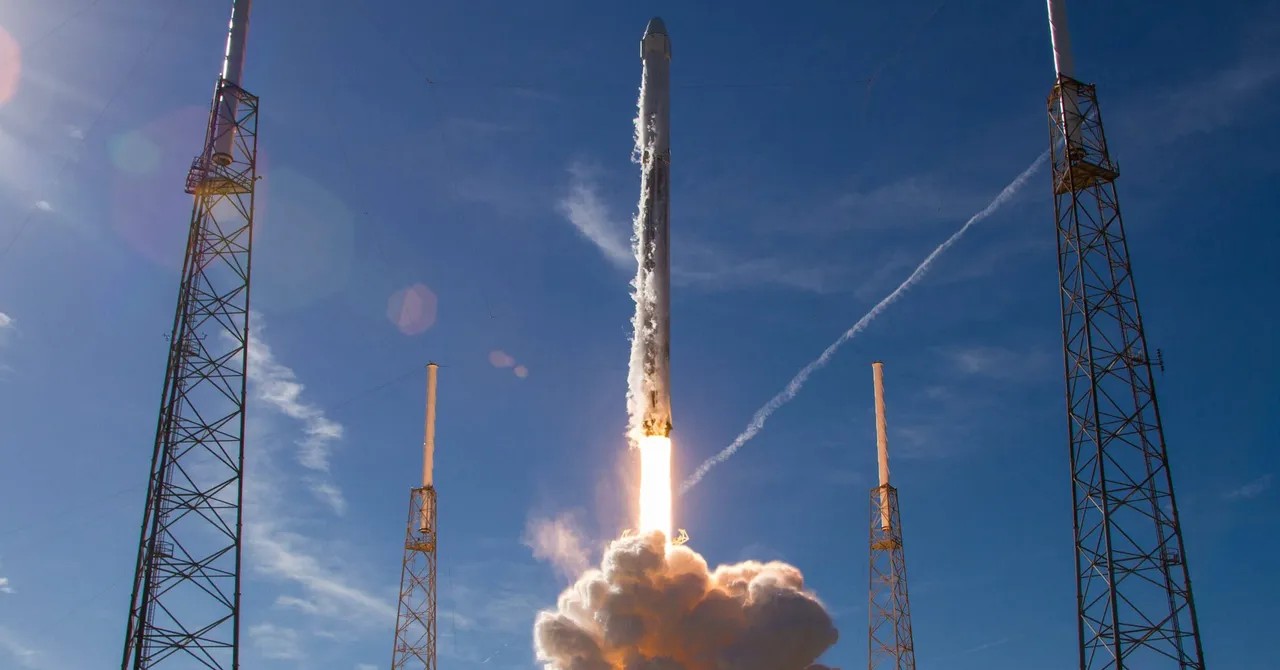
For decades, deep-space missions have relied on a tacit assumption: water ice exists on the Moon and Mars, and it can be broken down into hydrogen and oxygen for rocket fuel. But turning water into propellant isn’t just a theoretical problem; no one has ever done it at scale for actual spacecraft. Now, a startup called General Galactic is trying to change that.
The Core Challenge: Why Space Fuel Matters
The current model for long-duration space travel hinges on in-situ resource utilization (ISRU) – essentially, finding and using resources already in space. This avoids the astronomical cost of lifting fuel from Earth. However, ISRU remains largely unproven. If astronauts are to establish bases on the Moon or Mars, a reliable method of producing fuel from local water sources is crucial. This isn’t just about economics; it’s about feasibility.
General Galactic’s Approach: A Satellite Test
This fall, General Galactic plans to launch a 1,100-pound satellite powered entirely by water-based propellant. The mission, dubbed “Trinity,” will test two distinct propulsion methods: chemical and electrical.
For chemical propulsion, the satellite will use electrolysis to split water into hydrogen and oxygen, then burn the hydrogen as fuel. For electrical propulsion, the water will be split, and the oxygen ionized into plasma, then ejected using a magnetic field. This hybrid approach aims to provide both efficient long-term maneuvering and rapid response capability – something traditional electric “burp in space” thrusters lack.
Why Now? The Geopolitical Context
The timing is no accident. With China and Russia increasingly maneuvering satellites close to U.S. assets, the need for rapid orbital adjustments is growing. General Galactic’s technology could provide U.S. satellites with a significant tactical advantage, allowing them to evade potential threats.
“Sometimes you need more than a burp in space,” explains Luke Niese, General Galactic’s CTO, underscoring the need for maneuverability beyond slow, efficient electric thrusters.
The Science Behind It: Why Water is Tricky
Water isn’t the ideal rocket fuel. Liquid methane and other conventional propellants offer higher thrust. But water has advantages: it doesn’t require cryogenic storage, doesn’t pose the same explosive risks as some fuels, and is potentially available in abundance on other celestial bodies. The challenge lies in extracting and utilizing it efficiently.
Ionized oxygen, a byproduct of the electrical propulsion method, is highly corrosive and presents significant materials challenges. The chemical system faces questions about mass efficiency – the electrolysis equipment adds weight, potentially offsetting gains.
From Stanford Lab to Falcon 9 Launch
The company was founded by former SpaceX engineer Halen Mattison and Varda Space veteran Luke Niese, who met in grad school at Stanford. After extensive modeling and research, they secured $10 million in venture capital. Their goal: to prove water-based propulsion isn’t just theoretically possible, but practically viable.
The Verdict: A High-Risk, High-Reward Gamble
General Galactic faces significant technical hurdles. But if the “Trinity” mission succeeds, it could redefine assumptions about in-space refueling and unlock a more sustainable future for deep-space exploration. The experiment isn’t just about building a “gas station on Mars,” as CEO Mattison puts it, but about solving a fundamental bottleneck in humanity’s quest to become a spacefaring civilization.