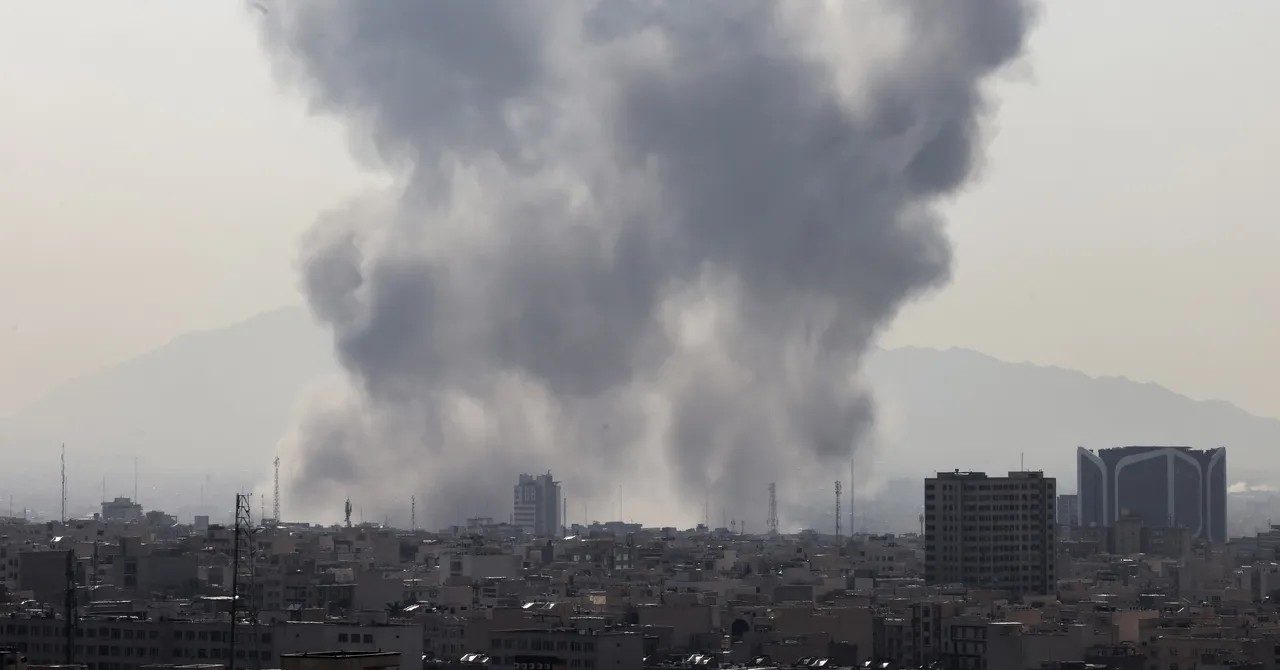
The United States and Israel have initiated large-scale military strikes against Iran, marking a significant escalation in long-simmering tensions. The attacks, confirmed by both governments, are framed as a preemptive effort to neutralize perceived threats from the Iranian regime. Explosions were first reported in Tehran early Saturday morning, with retaliatory strikes from Iran subsequently hitting targets in the United Arab Emirates and Bahrain.
Immediate Aftermath and Regional Response
The operation, dubbed “Operation Epic Fury” by US forces and “Operation Roaring Lion” by Israel, reportedly targeted multiple cities across Iran. The extent of damage remains unclear, though initial reports indicate missile exchanges between Iran and regional allies. Several countries, including Bahrain, Qatar, and the UAE, intercepted Iranian missiles, with at least one fatality reported in the UAE.
In response to the escalating violence, multiple nations—including Iran, Iraq, Kuwait, Bahrain, and Qatar—have suspended commercial airspace, and Iran experienced a near-total internet blackout shortly after the strikes. This disruption suggests an attempt by the Iranian government to control information flow amid the crisis.
Trump’s Justification and Calls for Regime Change
President Trump, in an eight-minute statement, justified the attacks as necessary to “defend the American people” against an “imminent threat.” He explicitly stated the goal of dismantling Iran’s nuclear program, asserting that the regime “can never have a nuclear weapon.”
In a striking move, Trump also urged the Iranian people to overthrow their government, stating, “The hour of your freedom is at hand.” This rhetoric raises questions about the long-term objectives of the strikes beyond immediate security concerns.
Escalation Following Failed Negotiations
The attacks follow weeks of military buildup in the region, including the deployment of the USS Abraham Lincoln aircraft carrier and increased surveillance flights. These preparations suggest a deliberate escalation, rather than a spontaneous response.
Recent diplomatic efforts to de-escalate tensions over Iran’s nuclear program have stalled. Negotiations in Geneva yielded only lukewarm results, with Oman’s foreign minister suggesting “significant progress” but no concrete breakthroughs. The US’s decision to evacuate embassy staff from Israel just prior to the strikes underscores the deteriorating diplomatic climate.
Long-Term Implications
The strikes against Iran represent a dangerous gamble with far-reaching consequences. The immediate impact will likely be heightened regional instability, with potential for further retaliatory strikes and proxy conflicts. The long-term outcome hinges on whether the US and Iran can return to negotiations or if this escalation spirals into a full-scale war.
The current situation underscores a critical shift in US foreign policy toward Iran, prioritizing military action over diplomatic resolution. This aggressive approach risks further destabilizing the Middle East and potentially triggering a wider conflict.