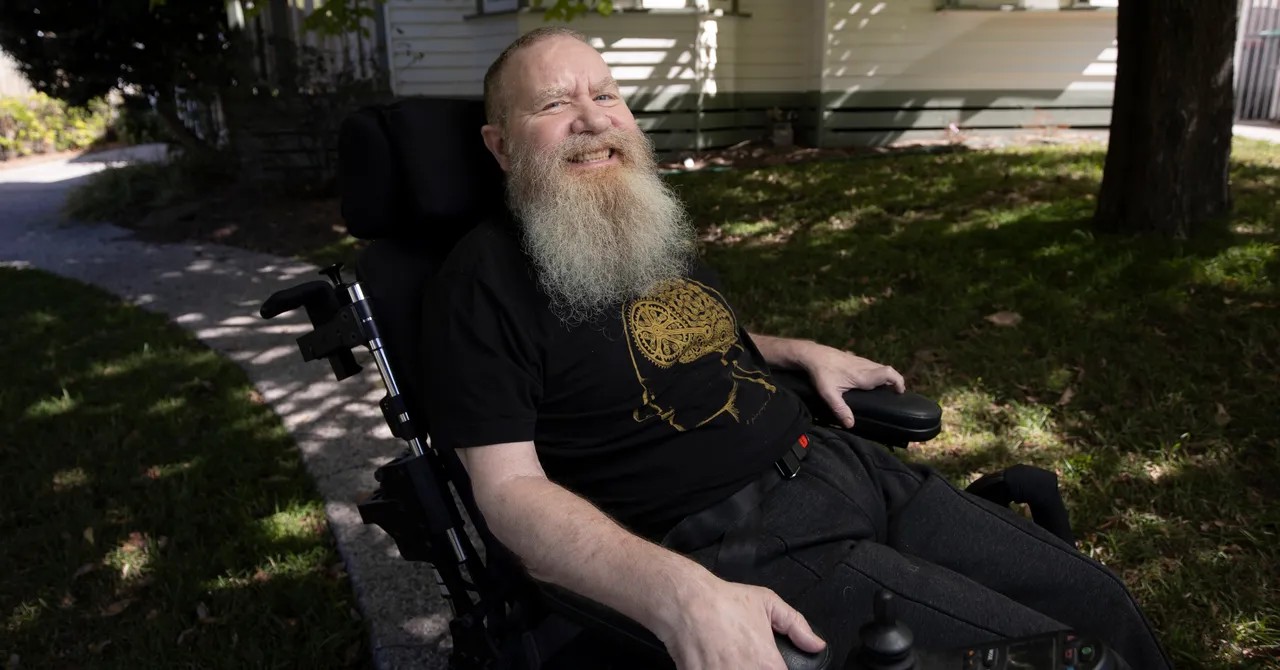
For over five years, Rodney Gorham has lived with a brain-computer interface (BCI) implanted in his skull. This milestone marks him as one of the longest-term human subjects in a field racing to connect minds to machines. Gorham, 65, suffers from amyotrophic lateral sclerosis (ALS) and is entirely paralyzed – unable to walk, speak, or move his hands. The implant, developed by Synchron, allows him to control digital devices using only his thoughts, providing a lifeline in a world increasingly reliant on technology.
The Evolution of Thought Control
Synchron is one of several companies, including Elon Musk’s Neuralink, pushing BCI technology toward commercial viability. Gorham’s experience has been central to this progress: he’s been a key participant in refining both the hardware and software over the past five years. While Nathan Copeland holds the record for the longest-lived BCI user (over 10 years with Blackrock Neurotech implants), Gorham’s journey is particularly relevant because he’s helped shape the first generation of commercially focused BCI products.
The Stentrode, Synchron’s flagship device, is a mesh tube inserted through a jugular vein and positioned against the motor cortex—the brain region controlling movement. It transmits neural signals to a receiver in the chest, then wirelessly to external devices. The initial goal was basic control: single clicks, then multi-clicks, and eventually more nuanced interactions like volume control. Gorham has since demonstrated the ability to move a computer cursor, a step toward full 2D control.
The Apple Connection and Real-World Applications
Gorham’s participation extends beyond the lab. He directly contributed to Apple’s Switch Control feature, allowing BCI users to operate iPhones, iPads, and the Vision Pro with their thoughts. Demonstrations show him controlling smart speakers, lights, pet feeders, and even a robotic vacuum remotely from his home in Melbourne, Australia.
Synchron’s field clinical engineer, Zafar Faraz, visits Gorham twice weekly to monitor performance, troubleshoot issues, and gather data. This iterative process has revealed critical insights, such as the impracticality of relying on a wired chest-mounted receiver. The next-generation design will eliminate that component, addressing the need for caregiver support and ensuring long-term usability.
Challenges and Ethical Considerations
The development process hasn’t been without its hurdles. As Gorham’s ALS progresses, using the implant becomes increasingly taxing. He now struggles with prolonged interactions, even simple text messages. This raises fundamental questions about the long-term viability of BCIs for patients with degenerative diseases.
The field faces broader issues as well: How do you measure the effectiveness of a device that doesn’t “cure” a disease? Will insurance cover expensive, surgically implanted devices with limited lifespans? ALS has a grim prognosis, but many patients live longer than expected. Companies must consider these human factors—each patient is unique.
The Future of Brain-Machine Interfaces
While BCIs show promise for those with stable paralysis (e.g., spinal cord injuries), even they may face mental fatigue from prolonged use. The industry is learning that simplicity and caregiver-friendliness are paramount. Rodney Gorham’s five years with a brain implant have provided invaluable lessons.
The real test will be scaling this technology, ensuring it remains usable and beneficial for patients, not just a fascinating scientific achievement.