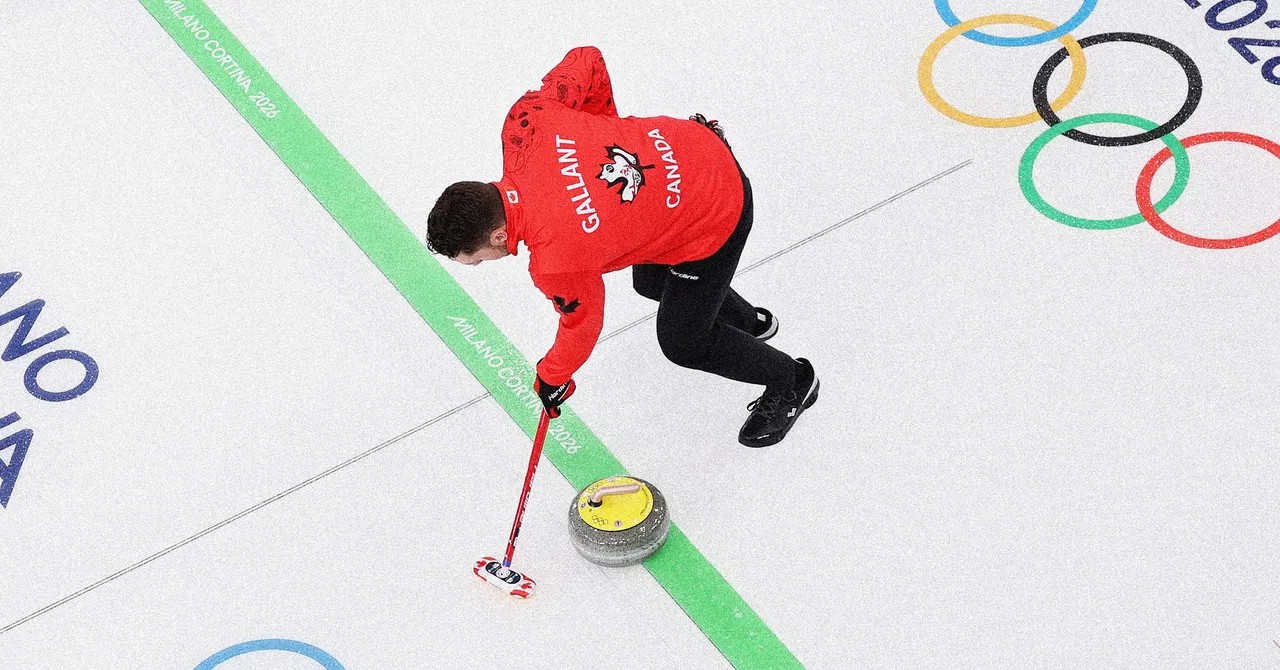
Every four years, the Winter Olympics bring a surge of interest in a sport many casual viewers stumble upon by accident: curling. The game’s appeal lies in its combination of precision, strategy, and a strangely satisfying mastery of physics. But behind the modern spectacle of high-tech stones and sweeping brooms lies a history stretching back centuries, intertwined with the climate of old Scotland and the evolution of winter recreation.
The Roots in a Colder World
The first documented instance of curling dates back to 1540 in Paisley, Scotland. A notary, John McQuhin, recorded a challenge between a monk and an abbot’s representative, both throwing stones on a frozen lake. The exact details are lost to time, but the game’s origins are clear: it thrived in regions with reliably harsh winters. As temperatures dropped, frozen bodies of water became natural curling rinks, and the sport took hold.
Early paintings from the mid-16th century by Flemish artist Pieter Bruegel the Elder depict scenes that strongly resemble curling, further confirming its presence in northern European culture. The word “curling” itself emerged in 1620, referencing the curved path of stones across the ice. The earliest official curling club, the Kilsyth Curling Club, formed in 1716 and continues to operate today.
Formalizing the Game
The Royal Caledonian Curling Club, founded in 1838, formalized the rules, leading to the creation of the World Curling Federation in Scotland. Initially, stones were simply flattened boulders with little standardization. Over time, regulations evolved regarding weight, shape, and pitch dimensions, adding layers of complexity to the game. Today, skips direct throwers on curl, strength, and trajectory while sweepers manipulate the ice to influence stone movement.
Global Expansion and Olympic Recognition
Scottish immigrants spread the sport to North America, particularly Canada, where it remains immensely popular. Curling debuted as a demonstration sport at the 1924 Winter Olympics in France, but it wasn’t until 1998 in Nagano, Japan, that it became an official Olympic event. Nations like Scotland, Sweden, Switzerland, and Norway have historically dominated Olympic curling competitions.
The sport even found its way into pop culture, appearing in films like Help! starring The Beatles and the James Bond movie On Her Majesty’s Secret Service. With the rise of 24-hour sports coverage and DVRs in the early 2000s, curling developed a dedicated cult following. As the 2026 Winter Games in Italy approach, that following is set to grow again.
Curling’s enduring appeal lies not only in its unique blend of skill and strategy but also in its historical connection to colder climates and the evolution of winter sports traditions.
The sport’s resurgence reflects a broader trend of niche athletic competitions gaining mainstream attention through modern media coverage. As the world warms, the irony of a sport born from frozen conditions thriving in the Olympic spotlight is not lost on those who follow the game.