The smart glasses market is rapidly maturing. Over the past 19 months, companies like Meta (with 2 million Ray-Ban Glasses sold), Oakley, Lucyd, Xreal, and MemoMind have flooded the consumer space. Even Realities’ new G2 glasses build on their first-generation G1 model, aiming to refine an emerging product category. While the G2s showcase impressive technology, including a larger display and a unique smart ring controller, lingering software issues prevent a truly seamless experience.
Design and Hardware Improvements
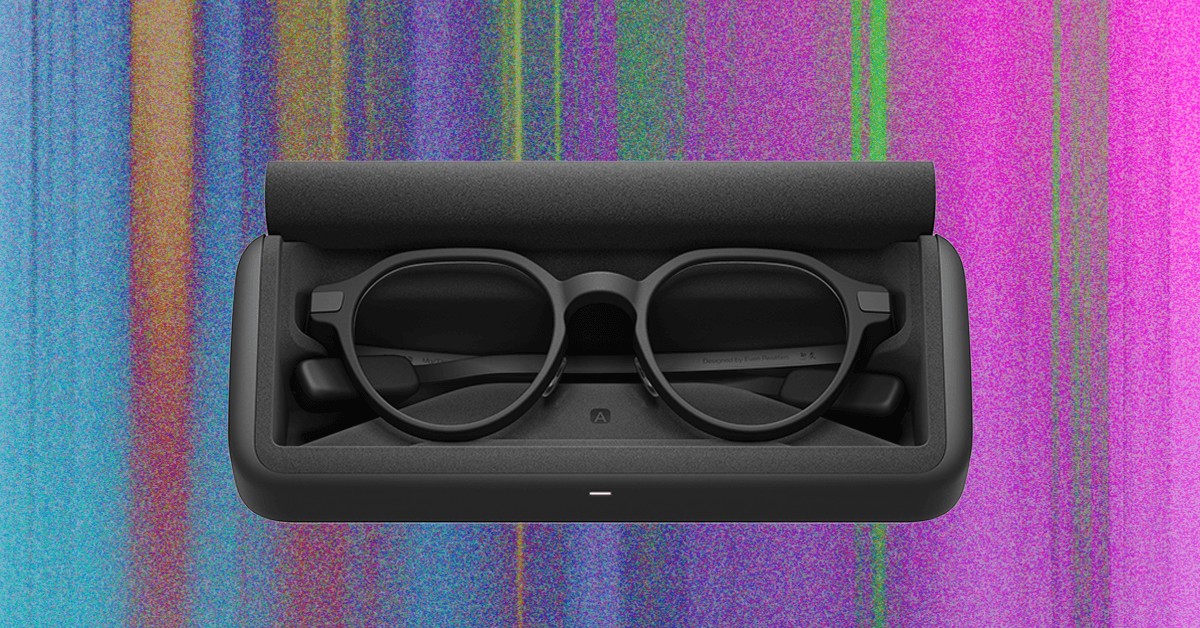
The Even G2 maintains the sleek aesthetic of the original G1, arguably making it the best-looking smart glasses currently available. The glasses come in two frame styles (A and B) with color options including gray, brown, and a new muted green. Weight has been reduced by 0.28 ounces due to aerospace-grade magnesium alloy and titanium temples, making them more comfortable for extended wear.
Like the G1, the G2 glasses avoid cameras and audio playback, prioritizing discretion. Notifications, navigation, translations, and AI prompts appear briefly in the user’s field of view. The optional $249 Even R1 smart ring adds a novel control method: tap, swipe, or hold to navigate the interface. The R1 also includes basic wellness tracking (heart rate, steps, sleep).
The display has been upgraded with Even HAO 2.0, utilizing micro-LED projectors and gradient waveguide optics. This results in a 75% larger, sharper image visible as a subtle rectangle within the lenses. Brightness reaches 1,200 nits, making the display readable in bright conditions. The G2 also gains IP67 water and dust resistance and supports prescription lenses up to ±12.00 diopters. Battery life has improved to two full days.
Software and AI Features: Promising, But Unpolished
Even Realities has leaned heavily into AI integration with the G2. The “Teleprompt” feature assists public speaking by displaying a scrolling transcript in real time. The onboard virtual assistant, powered by Gemini, ChatGPT, and Even’s LLM, provides answers to spoken queries. While the AI is accurate, processing speeds can be slow, hindering fluid interaction.
The “Navigate” widget has also been improved, offering clearer map views and directions. Translation support has expanded to 33+ languages, though it remains largely one-way. The most notable feature is “Conversate,” which analyzes real-time conversations and displays contextual cues (definitions, biographies, explanations) on the heads-up display. It also provides a live transcript and summary. The system works surprisingly well, but information can lag behind the conversation, leading to awkward pauses.
There are ethical implications: The G2 can record conversations without a visible indicator, though Even Realities claims audio is not saved. Users should consider obtaining consent before activating this feature.
Reliability Concerns and App Ecosystem
The G2’s reliance on the Even app (iOS and Android) introduces stability issues. Despite software updates, the glasses and R1 ring frequently require rebooting, upgrading, connecting, or disconnecting. The app is minimalist and easy to navigate, offering customizable notifications and access to news, calendar, and stock information.
The R1 ring is a valuable addition, enabling subtle control. However, accidental activation can occur due to fidgeting. Battery life is four days with the included charging stand. The combined cost (glasses + R1 + prescription lenses) reaches $848, making it a premium purchase.
Conclusion
The Even Realities G2 represents a significant step forward in smart glasses design and functionality. The hardware is refined, and the AI features show real potential. However, the lingering software instability and connectivity issues prevent it from being a truly frictionless experience. The G2 is a promising device, but it still needs to catch up with the hardware.