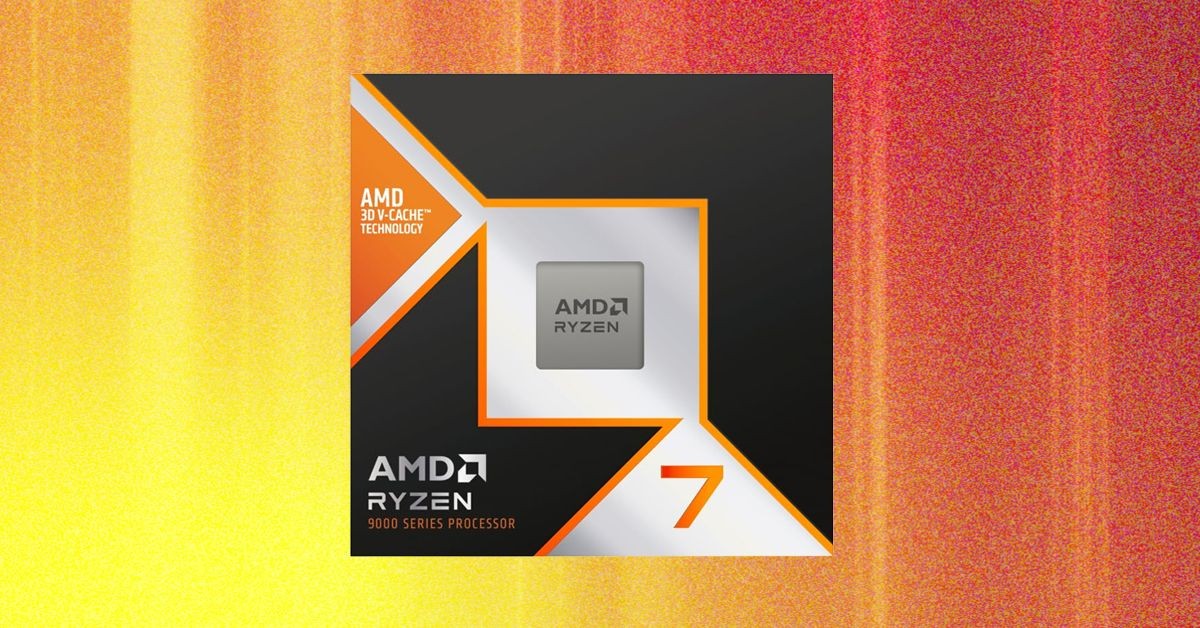
For the past year, AMD’s Ryzen 7 9800X3D has dominated the high-end gaming CPU market, offering an impressive combination of speed and efficiency. The newly released Ryzen 7 9850X3D builds on this foundation, but the improvements are so incremental that most gamers won’t notice a difference. While technically faster, the 9850X3D doesn’t deliver a compelling reason for existing 9800X3D owners to upgrade.
Minimal Hardware Differences
The primary specification change between the two processors is a slight increase in maximum boost clock: 5.6 GHz for the 9850X3D versus 5.2 GHz for the 9800X3D. This difference is likely due to AMD’s practice of “binning” chips – sorting silicon based on performance and assigning them to different SKUs. This means that the core architecture and underlying technology remain largely unchanged.
Testing Conditions
The review was conducted using a high-end system configuration, including an Asus ROG Crosshair X870E Hero motherboard, 32 GB of 6000 MHz G.Skill Trident Z5 Neo RAM, and a Samsung 9100 Pro SSD. Gaming tests were performed with an Nvidia RTX 5080, and thermal performance was monitored using a Corsair Nautilus 360 RS AIO cooler. Under load, the CPU maintained temperatures between 79-80°C, well within safe operating limits.
Overclocking Remains Simple
AMD continues to prioritize user-friendly overclocking through its Ryzen Master software. Even novice users can utilize the “Auto” settings to optimize performance with minimal effort. The software provides clear recommendations and automated processes for applying changes and running stability tests. The platform is stable and supports multiple profiles, making it easier to manage and share overclocking configurations.
Performance Benchmarks: Marginal Improvements
Synthetic benchmarks show a slight advantage for the 9850X3D, with a roughly 5% increase in single-core Cinebench R23 scores. However, multi-core performance remains virtually identical. Gaming benchmarks reveal similarly small gains. In Cyberpunk 2077 at 1440p with ultra settings and ray tracing enabled, the 9850X3D averaged 71.19 FPS compared to the 9800X3D’s 69.61 FPS—a difference of less than 2%. Other titles, including Marvel Rivals, Arc Raiders, and Counter-Strike 2, showed even smaller variations.
Practical Implications
The key takeaway is this: in real-world gaming scenarios, the performance difference between the two chips is negligible. Gamers already owning a 9800X3D have no reason to upgrade. If both chips are available at similar prices, the 9850X3D is the slightly better choice, but a discount on the older model would make more sense for most users.
The performance difference between the AMD Ryzen 7 9800X3D and the 9850X3D is so minimal that it’s unlikely to be noticeable during actual gameplay, making an upgrade unnecessary for existing owners.
The 9850X3D is a capable processor, but its improvements are too small to justify an upgrade for most gamers. Both chips deliver excellent performance, and the choice comes down to price and availability.