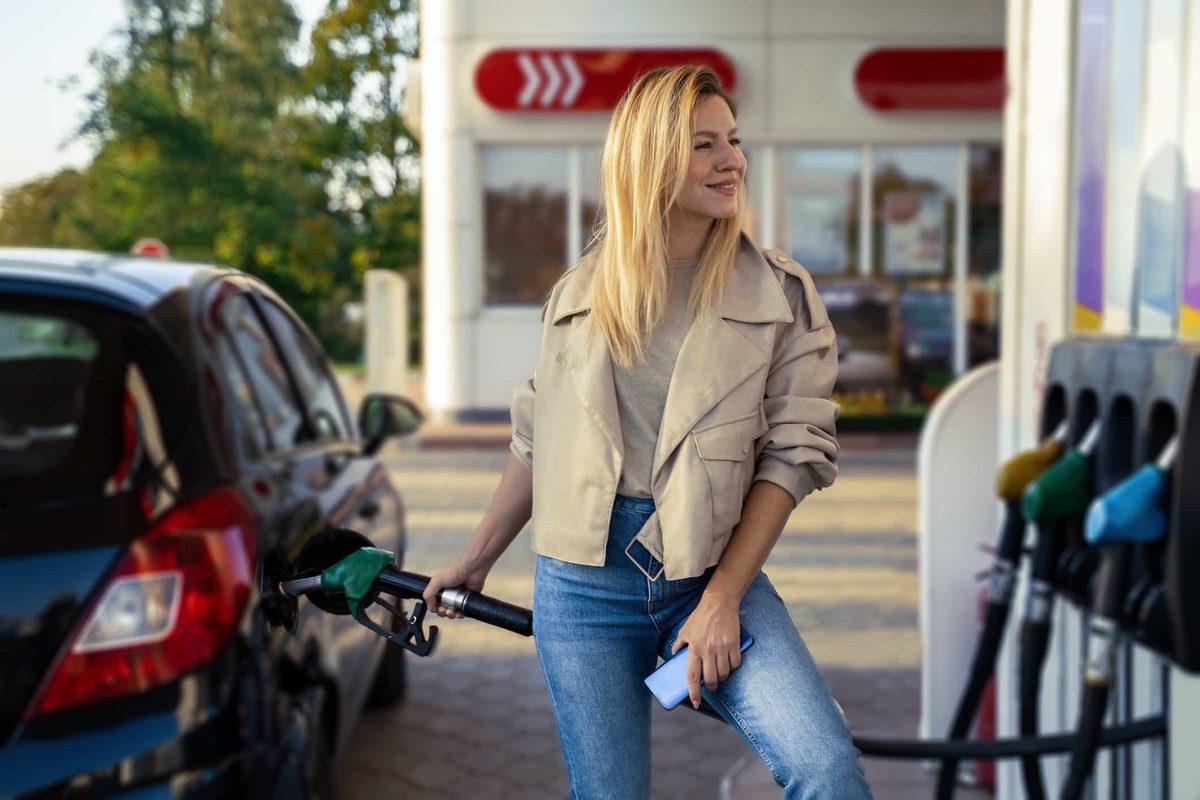
Gas prices are a constant drain on wallets. For most drivers, every trip to the pump feels like a minor financial injury. The obvious solution is to drive further to find the cheapest station. Most people don’t do it. They are tired. They are busy. They value their time more than a few cents per liter.
But there is a way to lower those costs immediately. No extra driving. No detours. Just a legal adjustment that works at any station.
The hidden variable in your price per liter
You likely think the price on the sign is fixed. It is not. There is a layer of tax and fee structures that varies by region, but more importantly, there is a payment method factor. Many drivers use credit cards. Some use cash.
Using a credit card often incurs an implicit cost. Not always a direct fee. But sometimes. And sometimes the lack of a cash discount is the real kicker. In many markets, stations offer a slight discount for cash payments. This is not a myth. It is a standard practice to avoid merchant fees.
“The price on the sign is the maximum. What you pay depends on how you pay.”
How cash discounts work in practice
Not all stations advertise this. They assume you will pay the higher credit card rate. It is a silent price discrimination. By switching to cash, you bypass the processing fees the station pays to the bank. They pass a fraction of that saving to you.
It adds up.
If you fill up once a week. And the discount is two cents per liter. You save a small amount each time. Over a year. That is significant.
Why you should check your payment method
Credit card rewards are often touted as the better option. But if the cash discount outweighs the cashback percentage. Cash wins.
Example.
Your card gives 1.5% cashback. The cash discount is 2%. You lose money by using the card. Simple math.
This is not about being cheap. It is about efficiency. You are already buying the fuel. You need to buy it at the lowest effective price.
Where to find these deals
Not every station participates. Look for small independent chains. Or local mom-and-pop shops. They have tighter margins. They appreciate the guaranteed liquidity of cash. Large franchises may have corporate policies against it. But not always.
Ask at the pump. Or check the sticker. It is often small print.
The psychological barrier
Many people hate carrying cash. It feels archaic. It feels risky. But digital wallets are changing that. Some apps link directly to cashback accounts. Or allow you to pay via QR code with a discount.
The key is awareness. You cannot save what you do not notice.
What happens if you ignore it
You pay the premium. Always. Every single time.
Does it matter? To some, no. To others, it is a leak in the budget. Small leaks sink big ships. Or at least fill up the gas tank faster than necessary.
The trick is simple. It is legal. It is available now. The only thing standing between you and savings is the habit of paying the higher price without questioning it.
Why pay more when you don’t have to?
Why hunting for the cheapest gas station is usually a waste of time
You’ve likely downloaded apps like Waze or local fuel comparators to find the nearest discount pump. It’s a common habit. But let’s be honest about the math. The savings are often measured in mere cents. If you have to drive five miles out of your way to save thirty cents a gallon, you’ve lost money on gas and time. The logistical cost of the detour frequently cancels out the price difference. It’s a minor inconvenience that yields negligible returns.
The real leverage isn’t in finding the absolute lowest base price. It’s in stacking rewards.
How to stack fuel rewards for maximum savings
Stop looking for the cheapest pump. Start looking for the best combination of payment methods. The strategy is simple but often overlooked: combine a station’s loyalty program with a bank card that offers cashback. You don’t need to change where you buy fuel. You just need to change how you pay.
Loyalty programs at major retailers like Carrefour, Intermarché, or Leclerc often have fuel sections. They offer immediate discounts or deferred credit in their reward wallets. This is the first layer of savings.
Cashback cards are the second layer. Cards from providers like Boursorama, Fortuneo, or Max can return up to 5% on purchases. This includes fuel. When you stack them, the percentage adds up.
“Combining loyalty points with cashback allows you to save without altering your routine.”
The concrete impact of stacking rewards
Let’s look at the numbers. Assume you spend €250 a month on fuel. That’s €3,000 a year.
If you only use a loyalty card giving you 2% back, you save €60. Not bad. But if you add a cashback card that gives you 3%, you aren’t just adding them linearly in a simple way—the mechanisms work together. You get the loyalty discount at the pump, and the cashback on the transaction. Depending on the specific terms, this can push your effective savings close to 4% or more.
On €3,000 in spend, that is roughly €120. Some calculations suggest you could hit €100 in pure annual savings with this combo. For zero extra effort beyond carrying two cards.
Most people stop at the first step. They see a cheaper pump and drive there. They ignore the fact that their credit card is paying them to spend money. The gap between these two approaches is significant over a year. It’s not about spending less. It’s about getting paid to spend.
Does your current card offer cashback on fuel? Many do, but few people check the fine print. The savings are there. They just require a slightly more active approach to banking than just swiping the first card in your wallet.
Time Your Pump Stops
Fuel prices are not static. They shift daily. In some regions, they fluctuate within a single day.
Most people fill up when convenient. You should fill up when the price is low.
- Prices often dip early in the week.
- Early mornings or late nights can yield cheaper rates at the pump.
Some brands run weekend loss-leader promotions. These “at cost” deals appear regularly.
Strategy beats impulse.
Pre-Buy Fuel Cards
You can purchase fuel cards before you need them.
Platforms like Veepee, cashback portals, and corporate committees (Comités d’Entreprise) sell these at a discount.
- Carrefour, Total, and Leclerc cards often carry 5 to 10% off.
- Use the card at the station as a standard voucher.
The pump price stays the same. The amount you pay drops.
This works even if market prices spike.
Real Annual Savings
Combine these methods.
- Loyalty cards.
- Cashback debit cards.
- Discounted fuel vouchers.
- Strategic timing.
The math adds up quickly.
Savings often exceed €150 annually.
High-mileage drivers save more.
Adopt the Habit Now
Stop chasing every price change.
Implement these steps once. They require minimal effort.
Your fuel budget improves without lifestyle disruption.
Start today.