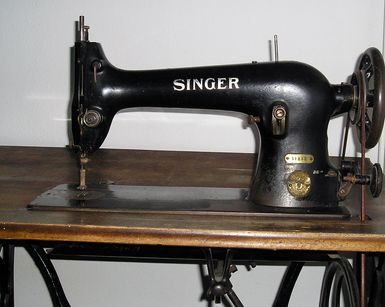
The history of modern manufacturing has a few hinge points. One of them involves a man who wasn’t particularly famous for his engineering, but was a showman who understood the power of a good sales pitch. Isaac M. Singer. He didn’t invent the sewing machine. But he patented the version that actually worked in a home setting, and he built the company that would wear his name for nearly 150 years.
Before 1851, people tried to mechanize stitching. They mostly failed. The machines were clunky. They jammed. They cost more than a year’s wages. Singer’s design was different. It used a rotary hook and a needle with an eye at the tip. That small mechanical detail made it possible to sew two layers of cloth together with a lockstitch. It was faster. It was reliable. And it was marketable.
The business started as I.M. Singer & Company. Its job was simple: sell the machines Singer had patented. But selling a expensive piece of hardware to working-class families in the 1850s required a financial innovation that still feels radical today. Rent-to-own. The company allowed buyers to make a down payment and then pay weekly installments. If they missed a payment, the machine was repossessed. If they kept paying, they eventually owned it. This strategy expanded the customer base massively. It turned a luxury into a necessity for millions of households.
From Local Business to Global Corporation
The early years were chaotic. Legal battles over patent infringement were constant. Other inventors claimed the core ideas were theirs. The courts eventually sided with Singer, or rather, with the consolidation of patents that followed. This legal victory paved the way for the next major structural shift.
In 1863, the company was incorporated as the Singer Manufacturing Company. It officially took over the assets and operations of I.M. Singer & Company. The name change signaled a move from a partnership model to a corporate structure capable of handling international expansion.
The 20th century brought rapid growth. By the mid-century, Singer was the dominant player in the global sewing machine market. The brand became synonymous with the object itself. People didn’t buy a “sewing machine.” They bought a Singer. The marketing was relentless. The imagery of the family home, the domestic worker, the industrial factory—all leveraged the trust and recognition the company had built.
In 1963, exactly 100 years after its incorporation, the company dropped “Manufacturing” from its name. It became the Singer Company. This wasn’t just a branding exercise. It reflected a diversification strategy. The company began buying other businesses. It moved into electronics. It tried its hand at home security systems. It wanted to be more than just a hardware manufacturer.
Restructuring and the End of an Era
The diversification didn’t always pay off. The market changed. Technology advanced. The domestic sewing machine became less central to daily life, even as industrial sewing remained critical. The company struggled to find its footing in the new economy.
In 2000, a significant corporate reorganization took place. Singer NV was established in The Netherlands. This move was part of a broader effort to streamline operations and appeal to European investors. It was a signal
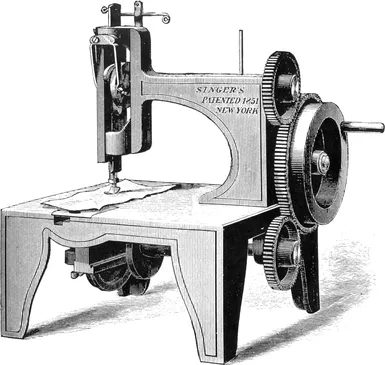
The story of the sewing machine’s rise to domestic ubiquity is often reduced to a single inventor. Isaac M. Singer’s 1851 model, famously captured in the 1880 publication Genius Rewarded; or, The Story of the Sewing Machine, was indeed the first practical sewing machine for general home use. It looked like a machine. It worked like a machine. But its success was not purely mechanical. It was legal.
Singer did not invent the fundamental technology from scratch. He built his first design on the back of Elias B. Howe’s earlier work. Howe had developed the essential eye-pointed needle and the lock stitch mechanism. He held the patent. And when Singer started selling his machines, Howe sued him for infringement.
The 1854 Infringement Lawsuit
The outcome of that 1854 lawsuit is the pivot point for modern industrial history. Singer lost.
Howe won the suit. The court ruled that Singer’s machine infringed on his patent rights.
By all logic, this should have ended Singer’s company. It should have forced him off the market or crippled his ability to manufacture. Instead, it did the opposite.
Singer was not just an inventor. He was a businessman with a talent for consolidation. Rather than trying to work around Howe’s patent in isolation, he aggressively acquired and combined other patents in the field. He built a web of intellectual property so dense that it created a barrier to entry for competitors while allowing him to continue production.
Mass Production Before It Was Standard
This patent strategy allowed Singer to scale. By 1860, his company was the largest manufacturer of sewing machines in the world.
This was not a small shop churning out custom orders. This was mass production. The infrastructure required for that scale—standardized parts, assembly lines, global distribution—was being built right then. Singer’s ability to navigate the patent landscape meant he could focus on manufacturing efficiency rather than litigation defense.
Why This Matters for Business Decisions
The Singer case is a early example of a strategy still used today: vertical integration and patent pooling. It shows that innovation is not just about the first idea. It is about the ecosystem around that idea.
Howe had the better technical patent. He created the core mechanism. But he did not consolidate the broader field. He sued one infringer. Singer sued back, bought up other patents, and created a fortress.
The lesson here is not that lawyers are more important than engineers. The lesson is that technological dominance requires structural dominance. You can have the best product. If you do not control the surrounding intellectual property, you may find your product outlawed.
Singer’s machine was practical. It worked. But its longevity was secured by a legal architecture that Howe and other early inventors failed to build. The result was a company that defined an entire industry for decades. The rest of the market had to catch up.
The Global Expansion of Singer Manufacturing
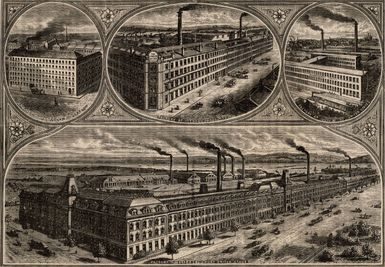
By 1855, the Singer Manufacturing Company had already decided that local was not enough. They began marketing their sewing machines internationally, a bold move for the time. The strategy paid off quickly. In Paris, the company won first prize at the World’s Fair. It was a clear signal that American engineering could compete with European craftsmanship.
Decades later, the company pivoted again. This time, the focus shifted from mechanical to electrical. At the Philadelphia electric exhibition in 1885, Singer demonstrated the first workable electric sewing machine. The industry watched closely. It wasn’t just a novelty. It was the future of domestic labor.
Mass production followed. By 1910, Singer was producing electric machines for home use on a large scale. This wasn’t just about making more machines. It was about changing who owned them.
Financing the Future
Singer was also a marketing innovator. They pioneered the use of installment payment plans. This changed everything. Before this, buying a sewing machine was a luxury few could afford. Installment plans made ownership accessible. It was a risk for the company. But it expanded the market dramatically.
“Singer was a pioneer in promoting the use of installment payment plans.”
The combination of technological innovation and financial accessibility created a loyal customer base. The company didn’t just sell machines. They sold a new way of life. The electric machines of the early 1900s were faster. They required less skill to operate. They were easier to maintain.
This model of financing and innovation continues to influence business today. The key takeaway is simple. Technology alone isn’t enough. You need a way for people to afford it. And you need a way to show them it works.
Singer did both. They won prizes. They changed markets. They changed how people paid. It’s a lesson in integration. Not just of machines, but of business models.
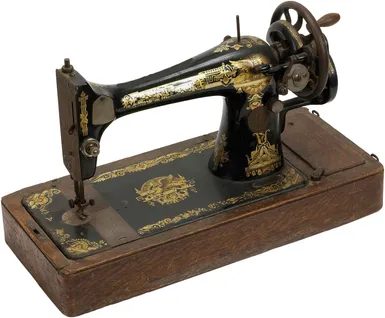
The Pivot From Stitching To Satellites
The sewing machine was only the beginning.
For decades, the brand became synonymous with a specific kind of domestic reliability. But look closer at the timeline. By the late 1970s and into the 1980s, the company was already branching out. They weren’t just making household appliances anymore.
The portfolio expanded rapidly.
Singer began manufacturing power tools. They entered the floor-care market. They produced furniture. They also moved into electronics controls. This wasn’t a minor side project. It was a strategic shift. The goal was to diversify beyond the traditional textile machinery market.
Then came the leap into high-tech.
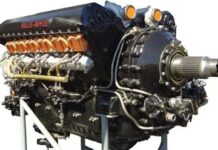
In those same decades, the company started producing aerospace electronics. This was a significant move. It signaled a departure from low-cost consumer goods toward high-technology items. The logic was clear. The sewing machine market was mature. Growth was limited. Aerospace offered higher margins and technological prestige.
The company didn’t just stop at the sewing machine. It built a diverse industrial base before the tech boom.
This diversification strategy had risks. Moving from simple mechanical devices to complex aerospace components required new expertise. It required significant capital. Not every diversification effort succeeds. But for Singer, the late twentieth century was a period of aggressive expansion.
The brand survived because it refused to stay static.
It moved from fabric to flight. From living rooms to orbit. The legacy of the sewing machine remained, but the business became something entirely different.