Manufacturing isn’t just about moving metal or assembling parts. It is a complex transformation process that turns raw materials into finished products and services. At its core, any production system is based on three basic inputs: labor, capital, and land. These are factors of production. Production managers often further break this down into the “five M’s”: men, machines, methods, materials and money. When you look at the bigger picture, you see physical flows of material and information moving through the system. These flows are limited by capacity. If the system cannot handle the volume, expectations will not be met.
Hidden production bottlenecks
Capacity is only half the story. Quality represents a hard limit for output. For a product to be considered successful, it must meet objective standards. These include appearance, performance, durability and ease of maintenance. Punctuality of delivery is also important. This also applies to the cost and quality of documentation. Controlling these variables is the primary responsibility of production managers. You have to balance the flow of physical goods with the flow of information. Paperwork is not just bureaucracy. It carries information that keeps the physical flow on track. When information channels are blocked, physical production stops.
Batch production system definition
There are three main types of production systems: batch, continuous and project production systems. The batch system is characterized by its flexibility. It uses general-purpose equipment to produce small production volumes. Each batch may have completely different specifications than the next. This type of system is often called a batch production system. A certain amount of product goes through one or more stages as a whole unit. The entire volume is created simultaneously at the end of the cycle.
Think about special tools. Or heavy construction machinery. These are not created in endless streams. They are built in batches. Processed foods also follow this pattern. In the service sector, insurance companies use batch systems to process claims. Each claim is a “batch” with unique details. The system processes them in groups, not individually. This approach allows for versatility. It sacrifices the high volume efficiency of continuous systems for adaptability.
Why flexibility is more important than volume
Continuous systems transport goods in an uninterrupted flow. Project systems deal with individual, large projects. Batch systems are in the middle. They offer a compromise. By grouping similar tasks together, you gain some efficiency. However, you retain the ability to change the configuration between batches. This is important for industries where demand fluctuates. Or where customization is needed.
The compromise is clear. You lose the speed of mass production. You gain the ability to deal with complexity. A job shop, as batch systems are also called, thrives thanks to this variety. Specialized, single-purpose machinery are not needed. It uses tools that can switch tasks. This reduces the need for massive capital investments in specialized equipment. However, skilled workers are needed to cope with the changes. The manager must plan carefully. You must control the system to ensure acceptable results. If the data flow fails, the batch stops. If the quality deteriorates, the entire batch may be rejected.
The role of information in physical production
Physical flows are visible. You can see the materials moving. However, data flows are invisible and yet just as critical. They are involved in every physical movement. Without accurate information, the system loses its way. The capacity of the information channel can become a bottleneck. It limits the system’s ability to meet performance expectations as much as physical capacity. Planning and control are the tools to manage this. Production managers must oversee both the tangible and intangible flows.
Consider the cost implications. Batch systems often have higher unit costs than continuous systems. But they reduce the inventory risk. They don’t have huge inventories of finished products. They produce according to demand. This corresponds to lean principles. It minimizes waste. But it requires precise coordination. A batch error can delay the entire cycle. The system must be agile. It has to adapt quickly.
How does this fit into modern industry?
Batch production is everywhere. It’s in the special chemicals that power your electronics. It’s in the processed foods on your shelf. It is in the customized machines used in the factories. Even services rely on it. Insurance claims, medical examinations and lawsuits are processed in batches. Each case has unique parameters. They cannot be handled in a rigid, continuous line. The batch system takes this diversity into account. It provides structure for variation.
But it’s not without its flaws. Switching between lots can take time. Determining the various specifications takes effort. This downtime reduces overall efficiency. The system must be optimized to minimize these transitions. Planning ahead can be helpful. However, due to the inherent nature of batch production, certain inefficiencies are inevitable. It’s a trade-off for flexibility.
The question is not whether batch systems are better than continuous systems. It’s about whether they fit the product. For large, standardized items, continuous systems


Mechanisms of continuous production
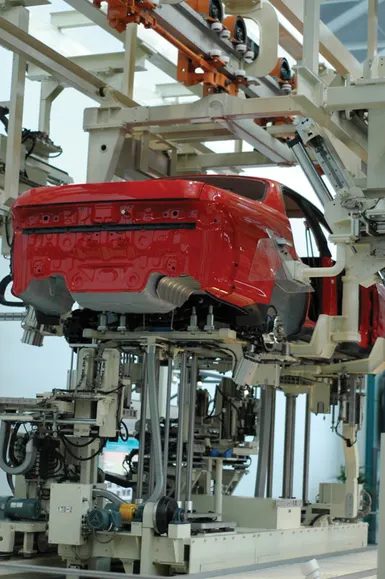
In a continuous production system, goods go through a fixed series of processes. Unlike job shops, where each project is unique, these lines deal with variations of the same core product. The goal is volume. High throughput requires special machines and strict process control. This setup reduces unit costs. It’s a trade-off: you sacrifice flexibility for efficiency.
Employees rarely see the product from start to finish. Tasks are divided into micro-segments. Each worker manages a small, repetitive function. This division of labor shortens the training period. It also minimizes the skill gap required for each position. The result is an optimized process that minimizes bottlenecks.
Continuous systems turn complex manufacturing into a rhythmic, predictable exercise in mass efficiency.
Where this model excels
This model can be seen everywhere in modern life. Look at a car factory. The chassis moves along the line. The parts are added in a certain order. The same logic applies to engines. It’s not just cars.
Think of the electronics section of any store. Televisions, washing machines, personal computers – they are all made on an assembly line. The complexity of the PC does not prevent its mass production. Standardized components enable rapid assembly. The system assumes that demand will remain stable and high. If the line stops, money bleeds.
This approach is synonymous with mass production. It’s not about craft. It is about scale. The equipment are designed for one thing: to move products. If done correctly, the cost per unit drops considerably. That is the main advantage. However, this requires huge upfront investment in this specialized infrastructure.
One shot production model
These systems are rarely found separately. For example, in electronics manufacturing, batch and continuous processes often merge together. Think of integrated circuits. Thousands of small chips are etched onto large silicon wafers in a massive batch. It takes dozens, sometimes hundreds of steps. Then these millimeter-wide circuits are cut apart. They move onto a continuous assembly line, connecting other components to form the final device.
But there is a third category. It is a project system. Also known as the “one-shot” model.
Here, resources come together for a single, unique purpose. You don’t repeat the process. You build one ship. One skyscraper. One airplane prototype. Or a custom-made supercomputer. The scale is unique. The repetition is zero.
This uniqueness creates a special problem. Standard efficiency metrics fail here. You cannot optimize the volume if the volume is one. Therefore, special management techniques were developed. Their sole job is to prevent costs from spiraling out of control. Without strict project control, a one-off build can easily go over budget.
“Due to the uniqueness of project systems, special management methods have been developed to keep production costs at an appropriate level.”
How do you price uncertainty? That is a key challenge. You are not selling a commodity. You are managing a complex event that cannot be repeated. The margin for error is thin. A lot is at stake. And when it’s done, it’s done. No second run. No spare stock. Only the final product is there and paid for.


The spacious interior of Florida’s Kennedy Space Center’s Vehicle Assembly Building is dominated by the suspended Space Shuttle Atlantis. It’s not just storage. It was the stage of the most complex mechanical synthesis in human history.
The shuttle sat alone and waited for its companions. It will soon be combined with a huge external fuel tank and two solid fuel rocket boosters. This assembly process is the last physical step before flight preparation.
The building itself is a monster. It is still one of the largest buildings in the country and was originally designed to house the soaring Apollo-Saturn V rocket. Its scale is hard to imagine without looking at the numbers.
VAB has about 3.7 million cubic meters of unused space. Within these walls are approximately 130 million cubic feet of air. This is an industrial cathedral designed to hold objects weighing thousands of tons, reaching all the way to the stars.
The VAB has about 3.7 million cubic meters of space, originally designed for the giant Apollo-Saturn V spacecraft.
Ken Thornsley/NASA