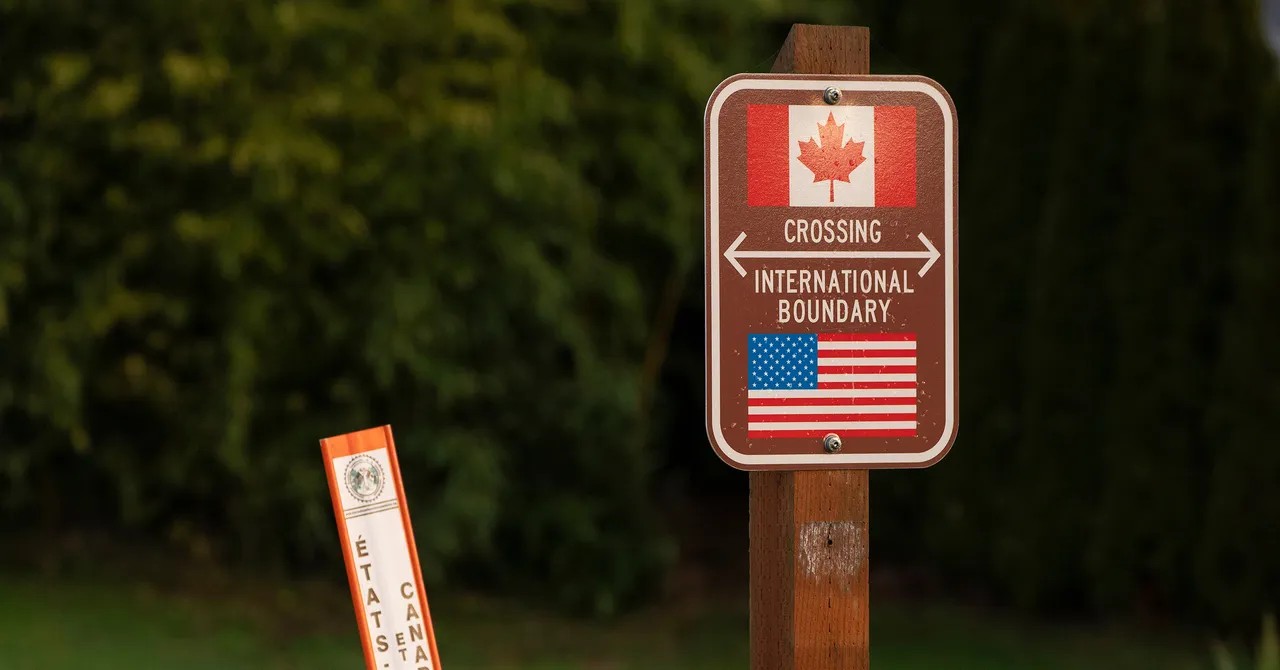
The United States and Canada are preparing for a significant technological experiment along their shared border this fall. The U.S. Department of Homeland Security (DHS) and Defense Research and Development Canada (DRDC) will collaborate on ACE-CASPER, a multiday exercise designed to test the resilience of autonomous systems and 5G communications in emergency scenarios.
Scheduled for November, the trial marks the first joint cross-border technology drill between the two nations in nearly a decade. While framed as a public safety initiative, the project raises important questions about the militarization of border surveillance and the growing influence of private defense contractors with ties to political figures.
The Mechanics of ACE-CASPER
The primary goal of the ACE-CASPER experiment is not merely to test drone autonomy, but to demonstrate persistent, resilient 5G communications across international boundaries.
- The Setup: Autonomous drones and ground vehicles will operate along the border, streaming live video and sensor data to a bi-national command-and-control center.
- The Scenario: The exercise will simulate a “national emergency response,” requiring seamless data sharing between U.S. and Canadian authorities.
- The Technology: Participants are asked to showcase “Command and Control: Intelligence Surveillance Reconnaissance” (C2ISR) capabilities—a term borrowed from the U.S. Department of Defense typically associated with military “kill chains.”
Although DHS describes the mission in terms of search and rescue, the procurement documents explicitly request vendors to demonstrate the ability to gather “real-time battlefield intelligence.” This language suggests a dual-use intent, where technology developed for disaster relief can be rapidly repurposed for security enforcement.
A Return to Cross-Border Cooperation
This initiative revives a collaboration model last seen between 2011 and 2017 under the CAUSE (Cross-border Automated Surveillance and Emergency) program. During those years, the two governments conducted five drills to test whether emergency responders could share radios, video, and data across the line.
The gap in activity has coincided with shifting political priorities and technological advancements. The current push is driven by DHS’s Science and Technology Directorate (S&T), which has recently been restructured under an executive order signed by President Donald Trump in 2025. This restructuring prioritizes:
1. Domestic Procurement: Favoring American-made drones and reserving contracts for domestic manufacturers.
2. Network Security: Aligning with Federal Communications Commission rules that bar new foreign-made drones from U.S. wireless networks.
The Political Economy of Border Tech
The companies positioned to benefit from these trials highlight a complex intersection of technology, national security, and political influence. Several vendors responding to the DHS call have direct financial ties to the president’s adult sons, Eric Trump and Donald Trump Jr.
- Powerus Corporation: A Florida-based drone manufacturer that recently merged with a golf course company backed by Eric and Donald Trump Jr. Powerus CEO Brett Velicovich stated, “Protecting American borders is exactly the mission our technology was built for.”
- Anduril Industries: Holds DHS’s largest border-security contract—a $1.1 billion agreement for AI-powered surveillance towers along the southern border. Trump Jr.’s firm invested in Anduril last year.
- Unusual Machines: An Orlando-based component maker where Trump Jr. previously served as an adviser and holds stock worth approximately $4.4 million. While they do not sell directly to the government, their components are used by suppliers who do.
- Xtend: An Israeli drone maker backed by Eric Trump, which recently opened a U.S. headquarters in Tampa and secured a multimillion-dollar Pentagon contract.
Why This Matters
The ACE-CASPER experiment is more than a technical stress test; it is a signal of how commercial 5G networks are becoming critical infrastructure for national security. By relying on commercial networks for cross-border intelligence sharing, governments are reducing their dependence on dedicated military communications systems, potentially lowering costs but increasing vulnerability to cyber threats or network outages.
Furthermore, the involvement of companies with close ties to the executive branch raises questions about conflicts of interest and the privatization of border security. As the U.S. pushes for “American-made” technology, the line between public safety innovation and political patronage becomes increasingly blurred.
The shift toward autonomous, 5G-connected surveillance represents a fundamental change in how borders are monitored—moving from static physical barriers to dynamic, data-driven networks controlled by a mix of government agencies and private tech firms.
In conclusion, the upcoming ACE-CASPER trials will test not only the technical viability of cross-border drone surveillance but also the political and economic structures shaping the future of North American security.